
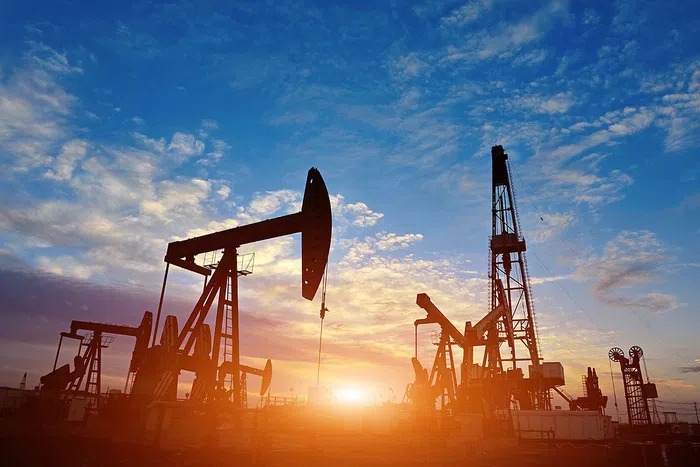
Discover the Top 10 largest oil producing countries in the world in 2026, with latest production figures, strategic insights, and global energy implications.
Oil remains power. It fuels economies, finances governments and underpins military strength. Since the Industrial Revolution, nations endowed with vast petroleum reserves have exerted disproportionate influence over global affairs, and that reality remains unchanged in 2026. From heating homes and powering aircraft to manufacturing plastics and fertilisers, crude oil continues to rank among the world’s most consequential commodities.
Yet production is far from evenly distributed. While some nations pump tens of millions of barrels daily, others contribute only modest volumes. According to the latest data from Global Firepower, these are the ten largest crude oil producers in the world in 2026, and why each holds strategic importance.
1. United States – 20,953,000 bbl/day
The United States remains the world’s largest oil producer by a considerable margin, generating nearly 21 million barrels per day. This dominance stems largely from the shale revolution, which unlocked previously inaccessible reserves across Texas, North Dakota, New Mexico and the Gulf of Mexico.
Hydraulic fracturing reshaped the American energy landscape in the 2010s, propelling the Permian Basin in West Texas to production levels comparable to entire OPEC nations. Energy independence has strengthened Washington’s geopolitical leverage and reduced reliance on Middle Eastern imports. With output still robust, the U.S. is expected to maintain its lead for the foreseeable future.
2. Saudi Arabia – 11,174,000 bbl/day
Saudi Arabia remains the most influential actor within OPEC. Producing over 11 million barrels daily, it serves as the world’s primary swing producer, capable of adjusting output rapidly to stabilise or influence markets.
The Ghawar field, the largest conventional oil field ever discovered, continues to anchor Saudi production. Revenues channelled through Saudi Aramco finance much of the Kingdom’s public spending, including Vision 2030, Crown Prince Mohammed bin Salman’s economic diversification programme.
3. Russia – 10,879,000 bbl/day
Despite sweeping sanctions following its 2022 invasion of Ukraine, Russia continues to produce close to 11 million barrels per day. Oil and gas revenues remain central to its state finances.
Western Siberia hosts the bulk of Russia’s output. Rather than retreating from global markets, Moscow has redirected exports towards China and India, demonstrating notable resilience in maintaining production levels.
4. Canada – 5,688,000 bbl/day
Canada’s 5.7 million barrels per day come predominantly from Alberta’s oil sands. Extracting and upgrading bitumen is more costly and carbon-intensive than conventional drilling, attracting environmental scrutiny.
However, Canada holds approximately 165 billion barrels in proven reserves, ranking third globally. Expanded pipeline infrastructure has gradually improved access to international markets.
5. China – 4,984,000 bbl/day
China produces just under 5 million barrels daily, yet remains the world’s largest oil importer. Domestic production falls short of meeting the demands of its vast industrial base and expanding middle class.
Major onshore basins such as Daqing and offshore projects in the South China Sea support output. Energy security remains a strategic priority, with state-owned firms investing heavily in overseas assets.
6. Iraq – 4,448,000 bbl/day
Iraq produces over 4.4 million barrels daily and holds an estimated 145 billion barrels in proven reserves. Southern fields near Basra dominate production.
Oil accounts for more than 90% of government revenue, leaving public finances highly exposed to price volatility. Infrastructure constraints and political instability occasionally limit expansion.
7. Brazil – 4,221,000 bbl/day
Brazil’s ascent reflects the discovery of deepwater pre-salt fields beneath the Atlantic. Though technically challenging, these reservoirs have propelled output above 4 million barrels daily.
State-controlled Petrobras leads development. Notably, Brazil also remains a leader in renewables, creating a unique dual energy profile.
8. United Arab Emirates – 4,146,000 bbl/day
The United Arab Emirates, driven primarily by Abu Dhabi and ADNOC, produces over 4 million barrels daily. A prominent voice within OPEC+, the UAE has occasionally advocated higher production quotas.
Petroleum wealth underpins one of the world’s largest sovereign wealth funds, supporting global investments and domestic infrastructure.
9. Iran – 4,112,000 bbl/day
Iran holds the fourth-largest proven reserves globally and produces over 4 million barrels daily despite longstanding sanctions related to its nuclear programme.
Production could rise significantly if restrictions ease. As a founding OPEC member, Iran remains central to Middle Eastern energy dynamics.
10. Kuwait – 2,910,000 bbl/day
&format=webp) Mishal Al-Ahmad Al-Jaber Al-Sabah
Mishal Al-Ahmad Al-Jaber Al-Sabah
Kuwait rounds out the top ten with nearly 3 million barrels per day. The Burgan field, operational since the 1940s, remains one of the world’s largest conventional oil fields.
Oil revenues finance generous welfare systems and a substantial sovereign wealth fund, forming the backbone of Kuwait’s economy.
Conclusion
Oil production in 2026 remains concentrated among a limited group of nations. Collectively, these ten countries account for the majority of global crude output. Their decisions on production levels, exports and geopolitical alignment directly influence global prices and economic stability.
Although the energy transition is accelerating and renewable investments are rising, oil continues to shape international politics and economic fortunes. For now, the nations dominating this list remain among the most strategically consequential in the world.