
The public, eager for judicial rectitude, would be interested in knowing whether there are any consequences for a judicial officer who ignores a formal communication from the NJC. Timeliness and deadlines matter in any credible framework for redress. Hence, the understandable disquiet at the disclosure that a judge against whom a petition has been written can, seemingly at will, elongate the process of determination by not responding for nine months. Processes that seem opaque and indefinite do not inspire confidence.
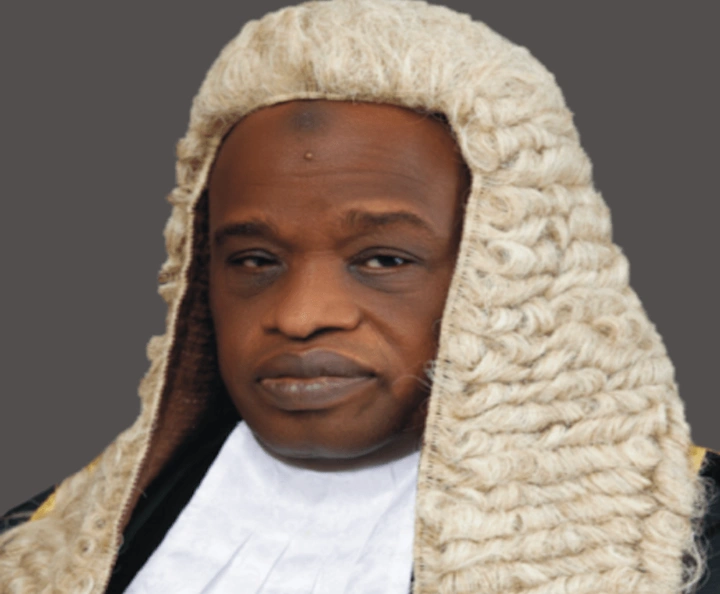
Do judicial officers take the authority of the National Judicial Council (NJC) seriously? This is one of the many questions raised by an update the NJC recently sent to Mallam Nasir El-Rufai on his petition against Justice RM Aikawa of the Federal High Court.
In black and white, the NJC explained, in a letter dated 24 March, that it forwarded a copy of El-Rufai’s petition to Justice Aikawa on 21 March 2025. When it received a reminder letter from El-Rufai on the matter in November 2025, the NJC realised that Justice Aikawa had not responded to its March 2025 letter. This prompted the NJC to write to the Chief Judge of the Federal High Court on the matter. The NJC said that it received Justice Aikawa’s response on 15 December 2025, and that the matter is now before its Preliminary Complaints Assessment Committee.
PRIVATE SPIRITUAL CONSULTATION FOR SERIOUS INDIVIDUALS ONLY…. Not every problem is physical.
Many high-level individuals understand that spiritual alignment plays a role in protection, decision-making, and long-term success — and they handle it privately.
If you are experiencing unusual resistance, repeated setbacks, or feel something is affecting your progress, health concerns without clear cause, or instability in relationships,it may be time for a confidential spiritual assessment.
Dr Adams Adam provides structured consultations focused on clarity, protection, and strategic direction.
Strictly Confidentia, All consultations begin remotely, Paid consultation required before any engagement
Serious inquiries only. This service is not for everyone — only for individuals ready to take decisive action toward control, stability, and progress.
Send a message on WhatsApp to proceed. ZERO SEVEN ZERO SIX TWO ONE FIVE SIX EIGHT THREE FOUR. WITH GOD ALL THINGS ARE POSSIBLE
The NJC’s disclosure raises the question of why a judicial officer is able to ignore communication from the NJC for nine months. Is that a sign of that officer’s dim view of the NJC’s authority? Is it an isolated instance of dereliction by an individual, or an attitude that is widespread among judicial officers?
These questions, valid as they are, are even more troubling when the institutional context is considered. The NJC is the constitutionally mandated accountability mechanism for judicial officers. What is the message when a citizen’s petition to such an important body remains at preliminary evaluation stage after a year, during which the judge concerned was unresponsive for nine months? Is there no urgency to the business of keeping citizens assured that the NJC is able and willing to enforce accountability?
While the petition remains pending, Justice Aikawa has not given any indication that he has considered a voluntary recusal from handling the ICPC case against El-Rufai at the Federal High Court, Kaduna. The judge does not seem to view the defendant’s lack of confidence in his impartiality as a barrier to justice. But a Court of Appeal ruling on 17 March upheld El-Rufai’s challenge to Aikawa’s July 2024 ruling in the case that prompted the petition.
One thing that can be said about the NJC’s letter to El-Rufai is its candour about what has delayed consideration of the petition for one year. Does Justice Aikawa’s delayed response suggest that there are flaws in the accountability framework that permit a party to delay the NJC’s work by not filing a timely response? Are certain judicial officers minded to treat the NJC as insulation from, rather than a facilitator, of accountability?
The public, eager for judicial rectitude, would be interested in knowing whether there are any consequences for a judicial officer who ignores a formal communication from the NJC. Timeliness and deadlines matter in any credible framework for redress. Hence, the understandable disquiet at the disclosure that a judge against whom a petition has been written can, seemingly at will, elongate the process of determination by not responding for nine months. Processes that seem opaque and indefinite do not inspire confidence.
While the petition remains pending, Justice Aikawa has not given any indication that he has considered a voluntary recusal from handling the ICPC case against El-Rufai at the Federal High Court, Kaduna. The judge does not seem to view the defendant’s lack of confidence in his impartiality as a barrier to justice. But a Court of Appeal ruling on 17 March upheld El-Rufai’s challenge to Aikawa’s July 2024 ruling in the case that prompted the petition. The Court of Appeal, Kaduna Division, agreed that the judge denied El-Rufai fair hearing and ordered that the matter be considered afresh by the Federal High Court.