
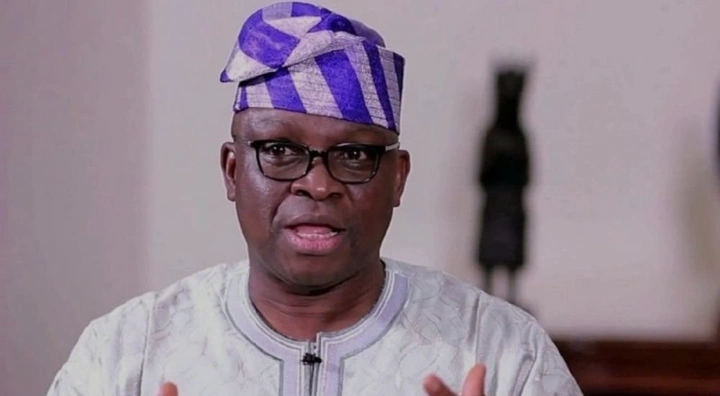
According to report by Daily Post on Sunday, March 29, 2026, Former Ekiti State governor, Ayodele Fayose, has cautioned that the African Democratic Congress (ADC) may face defeat in the 2027 presidential election if Peter Obi does not contest under its platform. Speaking on Sunday at the Peoples Democratic Party (PDP) national convention in Abuja, Fayose stressed the central role Obi’s participation plays in shaping the party’s electoral prospects.
On the opposition’s chances, Fayose remarked, “ADC’s electoral fortunes hinge on Obi’s participation. I told you that if Obi is not on the ballot of ADC, that is the end of ADC. It now appears he will not participate; Atiku will likely get the ticket.” His statement suggests that the ADC’s viability in the upcoming election could be significantly undermined if Obi chooses not to run, underscoring the former presidential candidate’s influence on the party’s strategy and public appeal.
Fayose also addressed broader questions about Obi’s political trajectory, noting that while he is widely respected for his character and competence, the pathway to the presidency remains challenging. His observations indicate that Obi’s absence from the ADC could not only affect the party’s chances but also reshape the dynamics of opposition politics in Nigeria ahead of 2027.
By emphasizing the pivotal role of individual candidates, Fayose highlighted how Nigerian political parties often depend on popular figures to galvanize support and maintain relevance. Analysts suggest that such dependencies can have lasting implications for party cohesion, voter confidence, and electoral outcomes, making the presence of key figures like Obi crucial in competitive political landscapes.
Fayose’s comments at the PDP convention signal a cautious but clear message: without strategic decisions on candidate representation, parties like the ADC may struggle to translate political influence into electoral success. As the 2027 elections draw nearer, his remarks add weight to discussions about candidate alignment, opposition unity, and the broader strategies that parties must consider to remain competitive in Nigeria’s evolving political arena.