
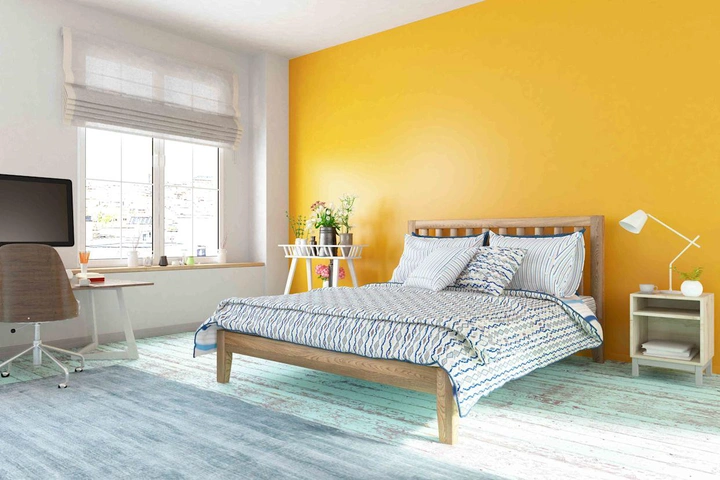
We know color has a powerful impact on mood, and in the bedroom, that can mean the difference between relaxation and restlessness. As the home’s most personal space, the bedroom should be a retreat where you can unwind, recharge, and escape from the outside world.
The wrong color can make this space feel chaotic, cold, or even claustrophobic, none of which are ideal for a place of rest. While personal preference plays a role, some colors are known to disrupt relaxation and should be avoided if you want a truly calming retreat.
To find out which colors to steer clear of, we spoke to interior designers, who know exactly what works—and what doesn’t—in a restful bedroom.
Stark White

White may seem like a safe, classic choice—but not all shades of white are created equal. A cold, stark hue can feel sterile and uninviting, especially under artificial lighting, according to interior designer Bailey Li. “Cool whites just don’t have the coziness needed for a restful retreat,” she says.
What to use instead: If you’re set on white walls, Li suggests opting for a warmer, creamier shade instead. “Creamy off-whites create a more soothing and inviting atmosphere,” she adds. This approach helps make the bedroom feel like a true sanctuary, rather than a blank, impersonal space.
Bright Purple

In the world of color theory, bright purple is more energizing than relaxing—which isn’t exactly ideal for a bedroom. According to Andrea Magno, director of color marketing and design at Benjamin Moore, the warm side of the color wheel with red, orange, and yellow tends to feel more intense and energetic—so these hues are less conducive to a restful environment.
What to use instead: Magno suggests looking for cooler colors, such as blues and greens. “These are naturally calming and are wonderful options for bedrooms and bathrooms.”
Yellow

There’s one big reason to think twice about yellow in the bedroom—it’s the color of sunlight. Since we associate yellow with daylight, it can make it harder for our bodies to wind down at night.
Yellow is also used to brighten a dimly lit room, but Magno says it can have the opposite effect. “A vibrant color like yellow can feel even more intense in a space with limited natural light,” she says.
What to use instead: Magno suggests saving yellow for living areas or bathrooms. If you’re set on using it in the bedroom, opt for a pale, muted shade that reflects light softly, without overwhelming the space—or add it in accessories, like bedding or side tables.
Red

Too much red can be overstimulating. According to Li, red raises energy levels, which can make it harder to relax or fall asleep. For a more calming effect, she suggests an earthy terracotta or a soft blush.
What to use instead: Magno agrees, noting that warm colors work best when balanced with an analogous color scheme—shades that naturally complement each other. If you’re hesitant to commit to red walls, she recommends using it in small doses—like a terracotta nightstand against pale blue walls—to create contrast, without overwhelming the room.
Orange

Like red, orange is bold and energizing—great for lively spaces, but not always ideal for winding down. Terracotta, a deeper mix of red and orange, is an exception, offering warmth without feeling overwhelming. However, bright orange “can feel out of place in a bedroom, where you want to relax after a long day,” says interior designer Mary Patton.
What to use instead: Patton suggests reserving brighter oranges for spaces that need energy, like a laundry room. “Bedrooms should be calming, and soft shades like blues, grays, or earthy neutrals create that restful atmosphere much more effectively,” she says.
Black and Dark Gray

Dark, moody bedrooms are all over Pinterest, but black and deep gray walls aren’t for everyone. While they can add drama and elegance, they don’t always create the restful environment that most people will want in a bedroom.
Magno suggests striking a balance instead of going all in on dark tones. “Pairing darker and lighter hues within the same family keeps things interesting,” she says. “It feels cohesive, and not overwhelming.”
What to use instead: Softer grays and warm neutrals provide a similar sophistication, without feeling too heavy