
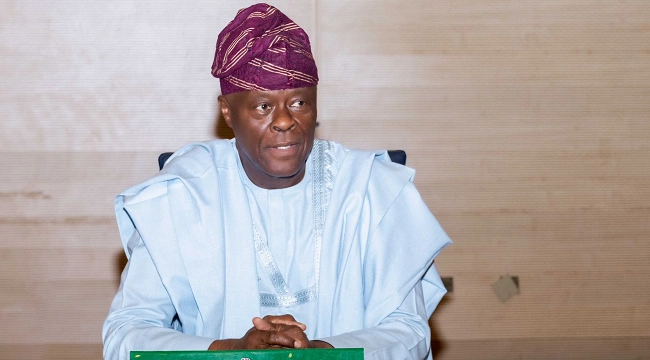
Amid the hike in the cost of fuel, the Minister of Finance, Wale Edun, says the current prices reflect market realities and believes Nigerians should be thankful that the country can refine petroleum products.
With the Middle East crisis stretching into weeks, the cost of petroleum products has spiked in recent days, leading to a rise in transportation costs.
But Edun said the development is an interplay of the market forces.
“The market price for petroleum products is what has been instilled by Mr. President—a mechanism that was missing for so long. It is important to understand that this is not a one-way street,” the minister said during an exclusive interview, which was aired on Wednesday’s edition of Channels Television’s Politics Today.
“We have seen Dangote [Refinery] reduce prices from around 1,200 Naira to just over 1,000 or 1,050 Naira; those are the natural dynamics of the market.”
He said, “the resilience that the Nigerian economy has is coming largely from the fact that we do have that investment by the private sector, by Alhaji Aliko Dangote, in refining, and we need to support our refiners just as others are supporting them to keep petroleum products flowing.
“I think we should be thankful at this time for the capacity we have in Nigeria to refine crude into petrochemicals and petroleum products.”
The Dangote Refinery, Africa’s largest, began the production of petrol in 2024 in what was a game-changer in the country’s energy sector.
The 650,000-barrel-a-day refinery built by Nigerian billionaire Aliko Dangote began producing diesel and aviation fuel in January of that year.
With the Middle East crisis taking a new turn, the refiner thrice increased the cost of petroleum, which it said was in reaction to the global crude oil market price.
“As responsible corporate citizens operating in a high-governance code and ethical environment, we believe it is imperative to reduce the price of our products as a reflection of the decline in global crude oil prices,” it explained after later reducing the cost of the commodity.
“All our crudes are priced on the global benchmark price plus a $3 to $6 additional premium. Our forex is paid at the prevailing market rate of the day, with no subsidy in both crude and forex.
“For the avoidance of doubt, the crude supplied under the Naira-for-Crude arrangement is priced according to the global benchmark price plus a premium which is then converted to naira using the prevailing market exchange rate.”