
Three weeks after President Bola Tinubu signed the Electoral Act, 2026, controversies and uncertainties trailing the election guidelines for the 2027 polls have refused to wane over concerns of alterations and provisions that may jeopardise the hitch-free conduct of the elections.
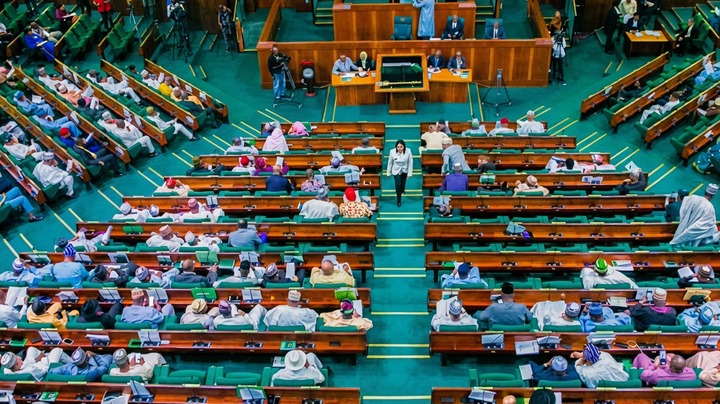
Just when parties are scrambling to meet strict deadlines set by the Independent National Electoral Commission (INEC) with the release of a revised timetable for the 2027 general elections, the House of Representatives on Wednesday, approved an amendment to the Electoral Act, 2026 seeking to expressly prohibit Nigerians from registering as members of more than one political party at the same time while prescribing stiff penalties for offenders.
The amendment, sponsored by House Majority Leader Julius Ihonvbere, proposes a fine of N10 million, a two-year prison term, or both for any person convicted of knowingly maintaining membership in multiple political parties simultaneously. The proposal was adopted after consideration at the Committee of the Whole, presided over by the Deputy Speaker, Benjamin Kalu.
The House proceeded to amend the Electoral Act, 2026, despite the law having been recently signed by President Tinubu. The bill seeks to amend Section 77 of the Electoral Act, 2026, by inserting new subsections aimed at strengthening party membership regulations and preventing what the lawmakers described as manipulative political practices capable of undermining party primaries and internal democracy.
Under the proposed amendment, a new subsection states that no individual shall be registered as a member of more than one political party at the same time. Section 77 (9) provides that where it is discovered that a person belongs to more than one political party simultaneously, such dual membership shall automatically become void, and the individual will cease to be recognised as a valid member of any political party until the membership status is regularised in accordance with the law and the constitution of the affected political party.
Section 77 (10) of the amendment further criminalises deliberate dual membership, stating that any person who knowingly registers or maintains membership in more than one political party commits an offence and is liable on conviction to a fine of N10,000,000 or to imprisonment for a term of two years, or both.
The amendment, however, sparked debate among lawmakers over potential clashes with constitutional rights. A member of the House, Fulata Hassan, noted that completely nullifying an individual’s membership in both parties could infringe on Section 40 of the Constitution, which guarantees freedom of association.
Hassan suggested that instead of stripping membership entirely, affected individuals should be allowed to retain membership in one party of their choice. He proposed a process whereby the electoral commission notifies the individual of dual registration, allowing 14 days to choose the party they wish to remain in. Failure to make a selection, he said, should render the person ineligible to participate in that election cycle’s primaries.
Deputy Speaker Benjamin Kalu, however, defended the amendment, arguing that registering in multiple parties amounts to dishonesty and misrepresentation. He emphasised that the law does not prevent Nigerians from changing parties, but explicitly prohibits simultaneous membership, which could be used to influence primaries or spy on rival parties.
“You cannot put your legs in two different houses at the same time. It is wrong,” Kalu said. He added that the measure ensures political accountability and upholds moral and electoral justice.
Concerns were raised about individuals who may be wrongly implicated due to administrative errors, such as names remaining on a party’s register after a legitimate resignation.
Another member, Jonathan Gaza, who welcomed the amendment, highlighted potential loopholes, asking how deliberate mischief could be prevented. He said there are instances where someone can be registered in another party without their knowledge.
Kalu, however, pointed to biometric identification as a safeguard and stressed that the law penalises only those who knowingly maintain dual membership.
Another lawmaker, Hon. Dennis Agbo, sought clarity on enforcement, questioning who would establish proof of dual registration. Deputy Speaker Kalu explained that INEC’s register submission requirements 21 days before primaries would help identify violators and ensure fair punishment.
The Deputy Speaker noted that INEC’s biometric and membership database would play a critical role in detecting dual registration. He said if the commission identifies an individual appearing in multiple party registers, it will determine the application of penalties, considering whether registration was deliberate.
Speaking, a lawmaker from Ekiti state, Akin Rotimi, drew attention to the absence of procedures for resigning from a party. Kalu ruled that resignation processes are covered under separate sections of the Electoral Act and not relevant to the dual membership provision under discussion.
A lawmaker from Imo, Ikenga Ugochinyere, highlighted evidential challenges, explaining that membership disputes often involve names appearing on multiple registers, stressing that the law of evidence and formal communication from parties would guide enforcement.
Another member, Auwalu Gwalabe, noted administrative challenges, citing examples where individuals might be inadvertently registered by party officials, reinforcing that the law only penalises knowingly deliberate actions.
Deputy Chief Whip, Ibrahim Isiaka, added that while the law will be interpreted by judges, inclusion of an affidavit requirement at the point of seeking elective positions could further ensure that candidates declare their party membership honestly, helping prevent disputes. After extensive debate, lawmakers retained the amendment in its original form.
Outrage over removal of certificate forgery as ground for election petition
THE removal of certificate forgery as a ground for filing election petitions in the newly amended Electoral Act 2026 has sparked widespread criticism, with political analysts and stakeholders warning that the provision could weaken democracy.
Section 138 of the Electoral Act 2026 outlines the grounds upon which an election may be challenged, but no longer includes certificate forgery among them. In addition, Section 138(3) imposes strict penalties where election petitions are filed on grounds outside those recognised by the Act. The court is required to impose fines of not less than N5 million on counsel and not less than N10 million on the petitioner.
Pan-Yoruba socio-political organisation, Afenifere, yesterday joined the voices of opposition to the removal of forged certificates as a ground for election petitions, warning that the development could weaken Nigeria’s democratic safeguards.
In a communiqué issued and signed by the leader of the group, Oba Oladipo Olaitan and Prince Justice Faloye, the group’s National Publicity Secretary, Afenifere, expressed concern that the National Assembly had narrowed the democratic space by limiting the grounds upon which election petitions can be filed.
Afenifere said the new Electoral Act eliminated forged certificates as a basis for challenging the qualification of candidates in election tribunals, a move it described as inconsistent with the provisions of the 1999 Constitution (as amended).
According to the organisation, Sections 137(1)(j), 182(1)(j), 107(1)(i), and 66(1)(i) of the Constitution clearly disqualify any candidate who presents a false or forged certificate in seeking public office.
However, it noted that the Electoral Act 2026, in Section 138, limits election petitions to only two grounds: that an election is invalid by reason of corrupt practices or non-compliance with the Act, and that the declared winner was not duly elected by a majority of lawful votes.
The group argued that before the amendment, allegations of forged certificates constituted a recognised legal ground for questioning the qualification of candidates seeking public office through election petitions.
It warned that removing the provision could embolden individuals with questionable academic credentials to contest for and occupy public offices without being effectively challenged.
“The 2026 variant of the Electoral Act 2022, which was expected to strengthen electoral reforms, has instead removed a veritable ground for the disqualification of persons seeking public office with forged certificates,” the communiqué stated.
Afenifere also faulted the introduction of punitive financial penalties for petitioners and their lawyers who file cases outside the prescribed grounds in the law, describing the measure as capable of discouraging legitimate legal challenges.
The group maintained that the development of Nigeria’s legal framework should expand democratic participation and accountability rather than restrict them.
It further questioned whether the National Assembly could, through ordinary legislation, limit constitutional provisions that clearly stipulate qualifications for elective offices such as the President, governors, and members of the National and State Assemblies.
Consequently, Afenifere called for the withdrawal and re-enactment of the law to restore the provision recognising forged certificates as a ground for disqualification in election petitions.
The organisation also urged lawmakers to revisit aspects of the Act that it said undermine public confidence in the electoral process, particularly the dilution of mandatory electronic transmission of election results.
“The compulsory electronic transmission of election results was the popular yearning of Nigerians, but the legislature diluted it by retaining a manipulable manual transfer alternative,” the group said.
It added that revisiting such provisions would strengthen the country’s democratic process and align electoral reforms with the aspirations of the people.