
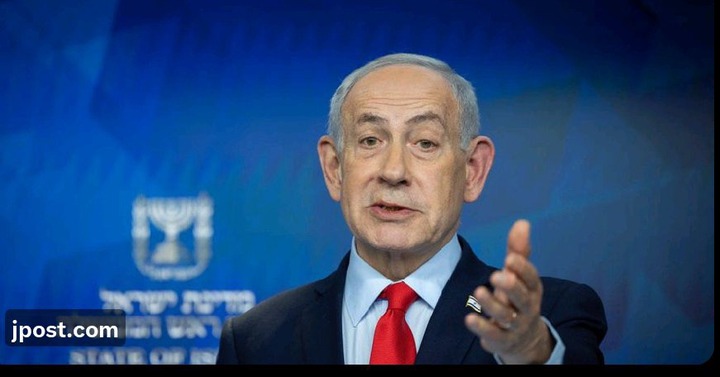
His statements quickly garnered attention in Israel and around the world, as Netanyahu spoke about increasing security worries in the Middle East while also using historical and religious imagery not often highlighted in government briefings.
During the press conference, the Israeli leader stressed the importance of the nation’s military readiness, especially its sophisticated missile defense systems and overall deterrence strategy. He emphasized the need for Israel to stay alert and ready to act decisively against threats posed by regional enemies.
Netanyahu specifically mentioned worries about Iran and its affiliates, cautioning that Israel would not hesitate to take action against any form of aggression. He pointed out that having superior defensive and offensive capabilities is fundamental to Israel’s national security strategy.
Over the years, Israel has made substantial investments in complex missile defense technologies, including systems like Iron Dome and David’s Sling, aimed at intercepting rockets and ballistic missiles targeting Israeli land.
While discussing these abilities, Netanyahu highlighted the necessity of upholding a strong deterrent in a region marked by ongoing tensions. He contended that Israel’s preparedness sends a strong signal to potential enemies that attacks on the nation would result in serious repercussions.
The prime minister further stressed the significance of global partnerships in fostering stability in the Middle East. He remarked that Israel’s collaboration with allies, such as the United States, is essential for enhancing the nation’s security framework and intelligence capabilities.
Netanyahu stated that strategic partnerships enable Israel to tackle new security threats more effectively and help to maintain a broader balance in the region.
Yet, aside from topics on military strength and geopolitical plans, Netanyahu’s comments took a surprising turn when he started referencing elements from Jewish history and religious beliefs.
He particularly mentioned the term Netzach Yisrael, which is deeply embedded in Jewish thought and signifies the lasting strength and spiritual continuity of the Jewish people through numerous challenges.
By mentioning this idea, Netanyahu seemed to connect Israel’s modern security obstacles with the larger historical story of Jewish resilience and survival.
Observers commented that such references are relatively rare in formal government press statements, which usually concentrate more on specific policies and security issues. Therefore, his remarks quickly ignited discussions among political analysts and commentators about the broader implications Netanyahu might have been trying to convey.
Some analysts interpreted his statements as an attempt to unify the nation by linking current geopolitical issues with the historical identity of the Jewish people. Others saw his comments as indicative of the increasingly intricate relationships among politics, history, and faith in Israeli public dialogue. Read In Details