
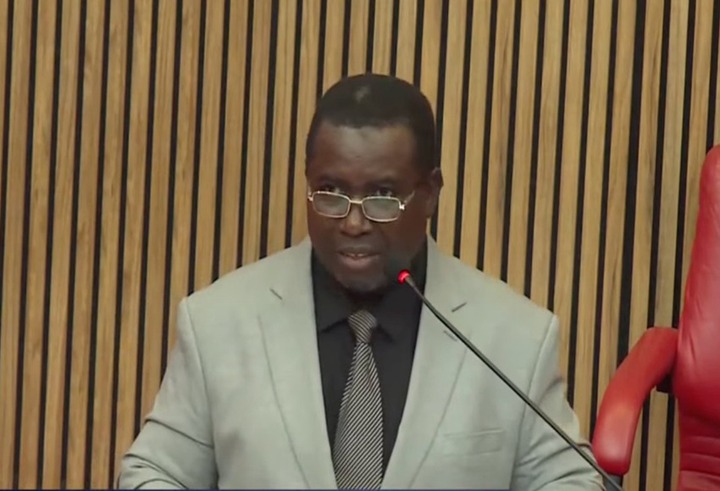
According to a report by Punch on Wednesday, April 8, 2026, the Chairman of the Independent National Electoral Commission, Prof. Joash Amupitan, has insisted that broadcast media organisations must provide equal access to all political parties, stressing that fairness in airtime allocation is a legal requirement, not a matter of choice.
Addressing stakeholders at the 81st General Assembly of the Broadcasting Organisations of Nigeria, Amupitan noted that with 22 registered political parties in the country, the need for balanced media representation has become more critical than ever.
“With 22 registered political parties, fairness in airtime allocation is not a matter of discretion but a requirement of the law,” he stated, urging broadcasters to comply fully with the Electoral Act 2026.
The INEC chairman raised concerns about the increasing commercialization of political airtime, warning that such practices could disadvantage smaller or less-funded parties.
He also pointed to the issue of incumbency advantage in state-owned media, noting that unequal access undermines the level playing field necessary for credible elections.
“Practices that skew access to the media weaken the level playing field required for credible elections,” he said.
Amupitan further reminded media organisations of the mandatory 24-hour “cooling-off period” before Election Day, during which political campaigns and advertisements are prohibited.
He explained that this period allows voters to reflect and make informed decisions without last-minute pressure.
Highlighting broader challenges, the INEC boss identified regulatory overlaps, enforcement gaps, and the convergence of traditional and digital media as factors complicating effective monitoring.
He called for stronger collaboration between INEC and the National Broadcasting Commission to address these issues.
He also emphasized the need for transparency in political advertising, including clear disclosure of sponsorship and pricing, while urging broadcasters to prioritise truth over profit.
Amupitan concluded by reaffirming the crucial role of the media in strengthening democracy, noting that responsible broadcasting will be key to ensuring free, fair, and credible elections in 2027.