
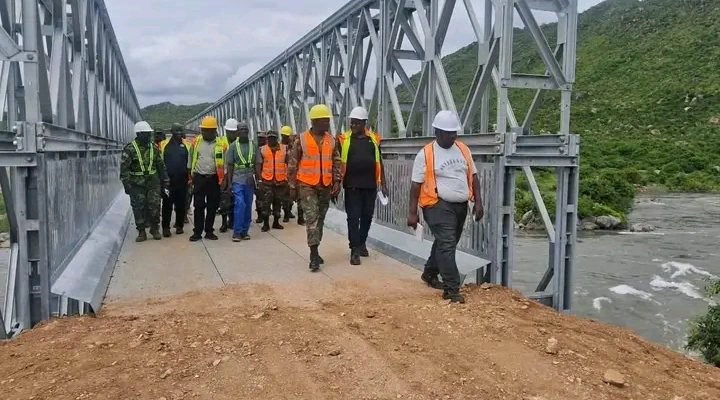
Malawi’s successful completion of the Shire River bridge by the Malawi Defence Force (MDF) Engineers Battalion is more than just an infrastructure milestone it is a powerful lesson in efficiency, discipline, and national self-reliance.
The 67-metre bridge connecting Neno and Blantyre, delivered ahead of schedule, stands as clear evidence that the country already has the capacity to execute major public works without overreliance on external contractors.
For years, Malawi has struggled with delayed and costly infrastructure projects.
Many government contracts have been plagued by slow implementation, budget overruns, and, in some cases, poor workmanship.
Against this backdrop, the MDF’s performance offers a refreshing contrast.
Completing such a critical project one month ahead of schedule is no small achievement it reflects strong planning, accountability, and professionalism.
This success should not be treated as a one-off event. Instead, it should serve as a turning point in how Malawi approaches public infrastructure development.
The government must seriously consider assigning more construction projects to the MDF, particularly in strategic and high-priority areas such as bridges, roads, schools, and emergency rehabilitation works.
One of the key advantages of involving the MDF is cost-effectiveness.
Military engineering units are already funded by the state, and their involvement can significantly reduce the inflated costs often associated with private contractors.
In addition, the structured and disciplined nature of the military ensures that projects are executed within set timelines and standards.
Beyond cost and speed, the social impact of such projects cannot be ignored.
The newly constructed bridge has already improved access to education, healthcare, and markets for communities in Neno.
This demonstrates how efficient infrastructure delivery directly improves people’s lives.
Expanding the MDF’s role could accelerate development in underserved and remote areas that are often neglected due to logistical challenges or lack of commercial interest.
However, expanding the MDF’s role must be done with clear guidelines.
The government should establish transparent policies that define when and how the military can be engaged in civilian projects.
Proper oversight by institutions such as the Roads Authority is essential to maintain accountability and ensure that quality standards are upheld.
Importantly, the MDF should complement not replace the private sector, stepping in where efficiency, urgency, or national interest demands it most.
Malawi can also draw lessons from countries like Tanzania, where military engineering units play a key role in successfully delivering large-scale government projects.
Adopting a similar model, tailored to Malawi’s context, could help the country achieve faster and more reliable infrastructure development.
The Shire River bridge is not just a structure connecting two districts it is a symbol of what Malawi can achieve by trusting its own institutions.
The MDF has proven that it possesses the expertise, discipline, and commitment required to deliver. The government must now act boldly.
By deliberately allocating more construction projects to the MDF, Malawi can reduce delays, cut costs, and accelerate national development.
The time has come to move beyond traditional approaches and embrace a system that prioritizes efficiency, accountability, and self-reliance.
If this momentum is sustained, the MDF could become a cornerstone of Malawi’s infrastructure transformation building not just bridges, but a stronger and more capable nation.