
Introduction
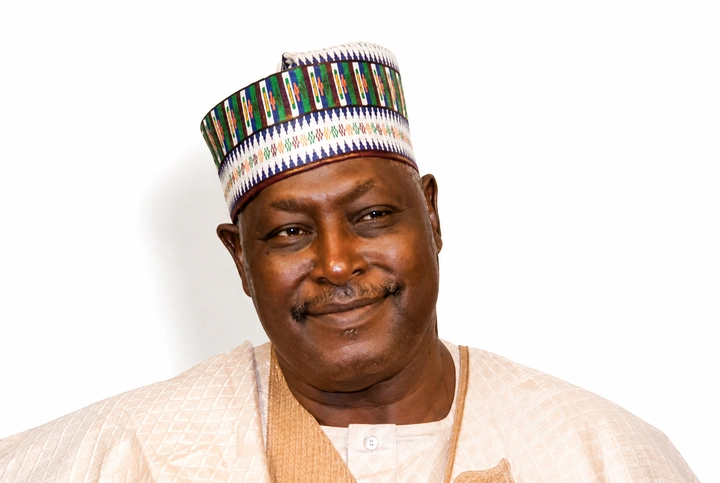
In the high-stakes chessboard of Nigerian politics, few actors combine insider experience with blunt candour like Babachir David Lawal. A former Secretary to the Government of the Federation under Muhammadu Buhari, ex-Northeast Vice Chairman of the All Progressives Congress (APC), and now a central figure in the opposition coalition rallying under the African Democratic Congress (ADC), Lawal speaks with the authority of someone who has operated at the highest levels of power.
In this explosive and deeply detailed conversation, he dismisses claims of his suspension as “a joke,” narrates how the ADC was rebuilt from near non-existence in Adamawa, accuses rival tendencies of attempting to hijack the party structure, and delivers a stark warning ahead of 2027: “It will be APC versus Nigerians.”
“Only in a fantasy can they suspend us”
Nigerians will not vote, Nigerians will respond.
The Sun:
There were reports that some individuals in Adamawa claimed to have suspended you, Atiku Abubakar, and Barr. Sadiq Dasin. How do you respond?
Lawal:
“I was asked that question at the time it happened, and I said it could only come from people who either do not understand politics or are acting under some strange influence. Because how does anyone wake up and assume they are national officers of a party and have the authority to suspend people like myself, Atiku Abubakar, and Sadiq Dasin? It tells you immediately that something is fundamentally wrong with that thinking. It is a joke, one that does not deserve serious attention.”
“What we met in Adamawa was practically nothing”
The Sun: There was a major dispute in the Adamawa ADC with two factions claiming leadership. What really happened?
Lawal:
“Let me be very clear: politics is a game of strategy, but it is also about outcomes. Not every strategy succeeds; some collapse completely. To understand Adamawa, you must start from the national level. When we began this coalition process, we had people like Atiku Abubakar, David Mark, myself, former governors, senators, House of Representatives members, and serious political actors who came together to build something credible.
We negotiated and adopted the ADC platform. But when we moved into the states, what we found in Adamawa was shocking, and several other states were worse than Adamawa. Out of 21 local governments, only two had conducted congresses recognised by the Independent National Electoral Commission (INEC). The rest? Just names on paper. No structure. No legitimacy. Nothing. So when you now hear someone claiming to be ‘chairman,’ you have to ask: chairman of what exactly? From almost nothing, we started building.”
“We built structure where none existed”
The Sun:
How did you go about it?
Lawal:
“We invited those who claimed to be part of the structure. The man who appeared as chairman was Mustapha Arabi, with Shehu Yohanna as secretary. But even at that, we later received communication indicating Yohanna was acting chairman, without clarity on how that happened. When we examined the structure, we found that critical positions, like vice-chairman, legal adviser, and several others, were vacant. That confirmed our conclusion: there was no real structure in Adamawa. So we set up a Transition Committee to rebuild the party from the ground up.”
“That was where the trouble started”
Lawal:
“We brought everyone together—stakeholders, including people like Aishatu Dahiru Binani, Jibrilla Bindow, Ishaku Abbo, and others. We verified membership lists across all local governments. Even those not originally on the list were accommodated in good faith. Then came the leadership selection. We insisted on one principle: only those on the verified list could contest.
When nominations opened, Senator Binani nominated herself. I told her jokingly, but seriously, ‘My sister, are you no longer interested in contesting for governor? You cannot do both.’ She then nominated another candidate, Alh. Kugama. Eventually, three names emerged, and we went into voting. Barr. Sadiq Dasin won overwhelmingly. At that point, she stood up and walked out. She was followed by Senator Ishaku Abbo and former Governor Jibrilla Bindow. That was the beginning of the crisis.”
“We even gave them another opportunity”
Lawal:
“We called them back and tried to stabilise things. In fact, we gave her the opportunity to nominate the secretary of the party, under conditions meant to ensure balance: gender, religion, and senatorial representation. She declined. We proceeded, and Blessing Tangushi from Demsa emerged as secretary.”
“Parallel processes, bulk purchases, and structural violations”
Lawal:
“What happened next was even more troubling. We later discovered that Senator Binani allegedly went ahead to pay about ₦50 million and obtained forms and membership materials outside the agreed process. Meanwhile, when we paid officially, about ₦100 million, Adamawa was commended for following due process and for being ahead of every state.
Then came the issue of parallel registers. We introduced electronic registration to complement manual records, but participation required proper integration into the official system. You cannot just gather papers somewhere and assume they become valid records. There are technical and procedural requirements.”
“They wanted 60% by ‘consensus’”
Lawal:
“At the congress stage, their group demanded 60% of positions at the party, under what they called ‘consensus.’ But consensus is not something you impose; it must be agreed. I told the congress committee clearly: you are not here to run the party. If consensus fails, conduct elections. That is democracy.”
“Money cannot replace process”
Lawal:
“Another issue was how forms were allegedly purchased in bulk. Our system required individuals to buy forms personally, provide receipts, swear affidavits in court, and submit properly completed documents. When you bypass that system, you create a legitimacy crisis. Many of those aligned with the other camp bypassed those processes, so they could not provide individual receipts or complete documentation. At the end of the congress, they did not secure even a single position out of approximately 4,400 positions up for grabs.”
“Dasin is the recognised chairman”
The Sun: So who is in charge of the ADC in Adamawa, politically and legally?
Lawal:
“Barr. Sadiq Dasin and the elected executives. There was no valid court order stopping our congress. We acted within the law. Even when pressure came for him to step down, he refused, and rightly so.”
“Experience commands respect”
Lawal:
“The other camp started complaining that everyone follows my instructions, even stating that members of the party listen to me too much. Why wouldn’t they? I don’t interfere with legitimate processes, I don’t interfere with anyone’s job, and I don’t allow anyone to bypass legitimate processes. I have served in the national leadership of the ANPP, CPC, APC, and now ADC. I understand party systems. And I stand firmly for doing things the right way.
Atiku Abubakar also played a strong part. He was always calling me to ensure fairness and that there is no faction in Adamawa ADC. He repeatedly invites groups to his house for a meeting to ensure peace and that there is no faction in Adamawa—only one credible structure.”
“2027 will be APC vs Nigerians”
The Sun: What are your projections for 2027, and how do you see the ADC performing at the polls?
Lawal:
“This is not just politics; it will be a reality check for the APC and for many politicians. Nigerians are tired of the APC. Everyone is bent on working hard to chase the APC out. Irrespective of the party decided, Nigerians now seem to have one single resolve: vote the APC out. 2027 will be APC versus Nigerians.
Even those defecting into the APC, especially the governors, are not as fully committed as Tinubu thinks. Many are there physically, but politically, about three-quarters of their loyalty is outside of President Bola Ahmed Tinubu’s agenda. What we are building in the ADC nationwide is a people-driven party—one that cannot be captured by a single individual. It is a structure that is resistant to one person controlling the system as if it were their personal estate.”
“They are publicising us for free”
The Sun: What about the challenges you faced during your recent national convention—the venue, the court cases?
Lawal:
“Honestly, those actions helped us. Every attempt to frustrate us—venue issues, disruptions—only made us more visible. In some places, the turnout looked like a major football match between Man City versus Man United. That kind of followership is organic. The party primaries in Adamawa were so hugely successful, with crowds queuing in numbers that would fill more than two football fields. It was the same in Sokoto and many other states.
In the past, we had to hire vehicles to arrange for their transportation and other logistics, including their feeding and accommodation, but now, they went ahead of us; they did not ask for any kind of help. Before we could ask, they were already at the venue. Some trekked just to exercise their rights and see the APC out of the system. So, the national convention was a success and a huge build-up from the successful state congresses.
They made all kinds of attempts to stop it. They turned off the lights; the place was like an oven, but no one cared. I even suggested that we move to the front of INEC’s office to hold our convention there, but some of our members did not agree. But it was one of the best conventions ever. We had guests from all over the world monitoring the event and it ended up making the ADC more popular. If I were still on Bola’s side, I would have advised him to stop focusing on the opposition, because it gives us free publicity, it has made Nigerians hate him even more, and it has made Nigerians see more reasons to reject him at the polls.”
On INEC and electoral trust
The Sun: There are allegations against INEC leadership, including Joash Amupitan. Your thoughts on this?
Lawal:
“Our position is simple: we do not trust Joash Amupitan; we do not trust the electoral system. Personally, I had high hopes for him. Whenever I think of him now, I see the devil incarnate. It has been much more than a rumour that they have been bragging that the election results will be written; if they dare do that, Nigerians will resist it and the country might even go up in flames.
We have been demanding free and fair elections, because Amupitan has given Nigerians sufficient reasons to distrust the electoral system. If Nigerians sense any form of foul play, what would come next might be beyond any of us, and the outcome would affect all of us—the rich and the poor. The consequences for national stability can be severe. Amupitan has gone ahead of the court and interpreted the judgment of the court regarding a matter of internal dispute in a party—something a man of high legal standing like him should know. That action placed him in a position where everyone doubts him and INEC as an institution.
We were aware that he was under severe pressure and that he resisted it to some extent, and we were also aware that some of his commissioners resisted his actions, but since he caved under pressure, it is clear that he could do worse under more pressure. One thing he should know is that we, Nigerians, would not take any fabricated results.”
The Sun:
What call will you make to Nigerians ahead of the 2027 elections?
“Nigerians already know what to do”
Lawal:
“As my former boss Muhammadu Buhari would say, ‘Jiki magayi’—your body tells the story. After four years of Bola Ahmed Tinubu, Nigerians can assess their condition and make their decisions. Nigerians will not only vote in 2027; they will respond to Tinubu and the APC, and to the kind of governance they enjoyed or endured in the last four years.
I don’t know the kind of person Tinubu is. Within these four years, he has successfully killed agriculture; farmers cannot farm, and farm inputs are much more expensive than the harvest. Whatever was good in the North, he moved it to the South West. Nigeria is literally on the brink of collapse. There is insecurity across the country. Budgets have been passed without implementation from 2024 to date. It is horrible. They award contracts without disbursement. We cannot go on like that; so, like I said, Nigerians already know what to do.”
The Sun:
Thank you for your time, sir.
Lawal:
“You are welcome.”