
In their haste to satisfy their paymasters or attract digital engagement, they have succeeded not only in maligning innocent citizens but also in dangerously misinforming the public. In one of my recent columns, I drew attention to this disturbing trend while commenting on the media narratives that surrounded the tenure of the immediate past Inspector-General of Police, Kayode Egbetokun.
One would have expected that such interventions would encourage some measure of introspection within the social media space. Unfortunately, the reverse appears to be the case. Rather than abating, the culture of sensational and irresponsible reportage seems to be flourishing, often through coordinated or syndicated misinformation.
I have often been accused, sometimes mischievously, of being loyal to my friends. My response to that accusation has always been simple: if a man cannot show fidelity to his friends, is it his enemies he will be loyal to? Loyalty, after all, is a virtue when it is anchored on truth. Consequently, I make no apology for defending individuals who are unfairly maligned through careless or dishonest reporting. This obviously does not imply that I will not be the first to condemn my friends if they engage in any impropriety. In the last few months, for instance, several media outlets, mostly discredited ones, have repeatedly asserted that the immediate past Inspector-General of Police was indiscriminately promoting senior police officers. I have often wondered whether those who peddled this narrative made even the slightest effort to investigate the legal framework governing promotions within the Nigerian Police Force.
A basic inquiry would have revealed that the Inspector-General of Police does not possess the statutory authority to promote senior officers. Under Nigerian law, the only body vested with that authority is the Police Service Commission, which is constitutionally established and whose members are appointed by the President of the Federal Republic of Nigeria. At best, the Inspector-General may recommend officers for promotion; the final decision rests entirely with the Commission.
If I personally know not any member of the member of the commission, I can speak of My lord, Honorable Justice Paul Galinge, a retired Supreme Court Justice, and the erudite, impeccable Taiwo Lakanu, a retired Deputy Inspector General of police. These two, at the barest minimum, cannot be dummies anywhere they are. I, therefore, to a large extent, trust their judgment. Yet, despite this clear legal position, sensational headlines were churned out accusing the former Inspector-General of indiscriminate promotions. The same pattern repeated itself when stories emerged alleging that he unilaterally carried out “special promotions.”
Again, the truth is that the Inspector-General can only make recommendations within established criteria; he cannot unilaterally promote officers. Equally troubling was the claim published by one mainstream newspaper suggesting that allocations meant for State police commands were withheld by the Inspector-General for six months upward. That allegation is not only reckless but fundamentally illogical. A diligent journalist would first have investigated whether such allocations were even released to the account of the Nigerian Police Force in the first instance before drawing conclusions about who withheld them. I am privileged to know the challenge in the release of statutory allocations and the struggle of the Federation to meet the challenges.
Hence, nothing can be farther from the truth. Must we call a dog a bad name simply because we desire to hang it? That rhetorical question captures the essence of the problem. Too often, reputations are destroyed through careless reporting that is driven more by narrative than by evidence. But this discussion is not merely about the police.
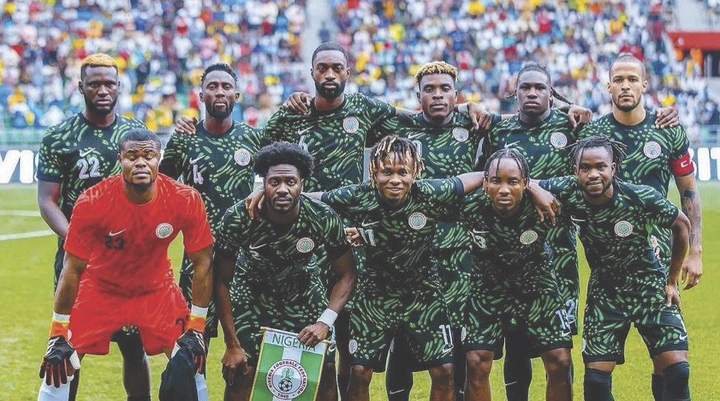
It is about a deeper crisis within our media culture, a crisis that once again came into sharp focus in the aftermath of the recent football encounter between the Super Eagles of Nigeria and the national team of the Democratic Republic of Congo.
In any society that values truth and the integrity of public discourse, journalism occupies a sacred space. The press is not merely a conveyor belt for information; it is an institution entrusted with shaping public understanding. That responsibility demands diligence, accuracy, and a commitment to truth. Unfortunately, the commentary that followed the match between Nigeria and DR Congo illustrates how easily that responsibility can be abandoned. Barely had the dust settled on the encounter before social media platforms and online blogs began circulating dramatic headlines suggesting controversies, conspiracies, and crises where none had been established.
Within hours, the digital space was flooded with speculative analyses and sensational claims, each competing for attention. Many of these narratives were not written by professional sports analysts who understand the technicalities of football or by journalists committed to factual reporting. Instead, they emerged from a growing ecosystem of digital opportunists whose primary motivation is traffic, engagement, and monetisation. In such an ecosystem, truth becomes secondary while sensationalism becomes the principal currency. The most disturbing dimension of this episode relates to the petition filed by the Nigerian Football Federation (NFF) before FIFA concerning the eligibility of certain players fielded by the Democratic Republic of Congo.
The match in question formed part of the qualification process for the 2026 FIFA World Cup playoff between Nigeria and DR Congo, which was played on Sunday, 16 November 2025, at the Crown Prince Moulay El Hassan Stadium in Rabat, Morocco. Nigeria’s petition raises serious allegations bordering on sporting fraud, eligibility violations, and nationality irregularities involving players fielded by the Congolese Football Federation (FECOFA). According to the petition, FECOFA fielded several players whose Congolese nationality was either illegally obtained, irregularly acquired, or incompatible with the nationality laws of the Democratic Republic of Congo. Nigeria contends that this conduct violates several provisions of the FIFA Statutes, including Articles 14, 15, 17, 57, and 58, which regulate eligibility and player registration.
Beyond these statutory provisions, the alleged conduct also implicates the FIFA Disciplinary Code, particularly provisions relating to fraud, falsification of documents, and the integrity of competition. The legal framework governing this issue includes Article 5 of the FIFA Regulations concerning the principle of single nationality, Article 7 dealing with the acquisition of a new nationality, and Article 11 relating to documentation and integrity requirements.
Nigeria further contends that the actions complained of amount to violations of Article 21 of the FIFA Disciplinary Code, which addresses forgery and falsification; Article 22 concerning fraud and misrepresentation; Article 25 on unlawfully influencing match results; and Article 61 regarding the responsibility of member associations. An important dimension of the case lies in the nationality law of the Democratic Republic of Congo itself. Article 10 of the Congolese Constitution, together with Organic Law No. 04/024 of 12 November 2004, expressly prohibits dual nationality.
Under Congolese law, an individual cannot simultaneously hold Congolese nationality and that of another country. Consequently, where a person acquires another nationality without following the legally prescribed procedure for renunciation or recovery of Congolese citizenship, any Congolese nationality attributed to that person may be considered void or voidable. In such circumstances, a passport obtained on the basis of that nationality becomes administratively invalid, even if it has not yet been formally annulled.Nigeria has placed before FIFA evidence suggesting that several Congolese players allegedly possess dual nationalities contrary to Congolese law. If established, that situation would render such players ineligible to represent DR Congo in international competitions.
The players identified in the petition include Lionel Mpasi (French nationality), Aaron Wan-Bissaka (British nationality), Axel Tuanzebe (British nationality), Arthur Masuaku (French nationality), Samuel Moutoussamy (French nationality), Ngal’ayel Mukau (Belgian nationality), Nathanael Mbuku (French nationality), and Cedric Bakambu. Other players mentioned include substitutes such as Timothy Fayulu (Swiss nationality), Matheu Epolo (Belgian nationality), Joris Kayembe (Belgian nationality), Edouard Kayembe (Belgian nationality), Steve Kapuadi (French nationality), Kalulu (French nationality), Balikwisha (Belgian nationality), and Mario Stroeykens (Belgian nationality). Nigeria’s request before FIFA is therefore straightforward: that the match be awarded in favour of Nigeria in accordance with Article 31 of the FIFA Disciplinary Code, which provides for match forfeiture where ineligible players are fielded.
Contrary to the dismissive narratives circulated in some media spaces, Nigeria’s position is not novel. FIFA has repeatedly sanctioned national teams for similar violations. In the case of Emilio Nsue López v FIFA (Decision FDD-24394), Equatorial Guinea forfeited two World Cup qualification victories due to irregularities relating to the player’s nationality. Similarly, the Malaysian Football Association and several players faced sanctions for forgery and falsification of documentation. The Court of Arbitration for Sport also addressed nationality-related eligibility issues in CAS 2016/A/4831 (FEGUIFUT v CAF & FMF), affirming the importance of strict compliance with eligibility rules. More recently, FIFA sanctioned Gabon with a 3–0 defeat for fielding an ineligible player, Charly Moussono. The Asian Football Confederation also punished East Timor by nullifying 29 matches after the country fielded ineligible Brazilian-born players who had obtained nationality through irregular documentation. Perhaps the most instructive statement came from FIFA’s Appeal Committee in the Malaysian case, where it emphasised that eligibility rules are not mere procedural technicalities but fundamental safeguards for the integrity of international football.
The Committee observed that any attempt to forge documentation in order to circumvent eligibility regulations constitutes a serious breach that undermines the fairness of the game and cannot be tolerated. Nigeria’s position also finds support in Congolese judicial precedent. In the constitutional case Moïse Katumbi v Constitutional Court (R. CONST. 178/2015), the court held that holding another nationality automatically extinguishes Congolese nationality and invalidates any Congolese passport held by the individual. In that case, the court even invalidated an election on the ground that the candidate possessed Belgian nationality.
These precedents reinforce Nigeria’s argument that nationality obtained through misrepresentation or concealment of another nationality is legally void under the Congolese law. Against this background, it is deeply disappointing that sections of the Nigerian media chose to trivialise the petition. Instead of examining the legal and regulatory foundations of the case, many journalists rushed to declare that Nigeria had already lost the petition, despite the fact that FIFA had not delivered any decision. The situation became so absurd that social media platforms were flooded with claims that the case had been dismissed. Yet the truth remains simple: the petition is still under consideration, and the processes provided under FIFA’s disciplinary framework, including the possibility of appeals, remain open.
Even when the Chairman of the National Sports Commission, Mallam Shehu Dikko, publicly refuted the fake reports, some media outlets found it difficult to acknowledge their error. The mere fact that DR Congo appears on provisional competition listings does not foreclose the possibility of sanctions should FIFA determine that eligibility rules were breached. A diligent journalist would have understood this basic procedural reality without the need for official clarification. What this episode reveals is not merely an isolated failure of reporting but a deeper malaise within segments of our media ecosystem, a culture of haste without verification, commentary without research, and conclusions without facts.
The sad commentary is even that if the country journalists cannot assist in ventilating the case of Nigeria, the least they can do is to be indifferent and not constitute themselves into saboteurs. The Yoruba have a proverb that aptly captures this situation: “Oosa bi o le gbemi, se mi bi o ti ba mi.” In essence, if you cannot help me, at least do not harm me. Journalism, at its best, serves the nation by illuminating truth and guiding public understanding. But when it degenerates into sensationalism and misinformation, it becomes a liability to the society it ought to serve. Perhaps it is time for our media community to pause and recalibrate.
Responsible journalism demands patience, diligence, and integrity. It requires journalists to verify allegations before publishing them and to prioritise truth over traffic. If our media can rediscover these fundamental principles, public conversation in our country will be richer, healthier, and more responsible. But if the present culture of junk journalism persists, we risk creating an environment where noise overwhelms truth, and where misinformation becomes the dominant currency of our national discourse.