
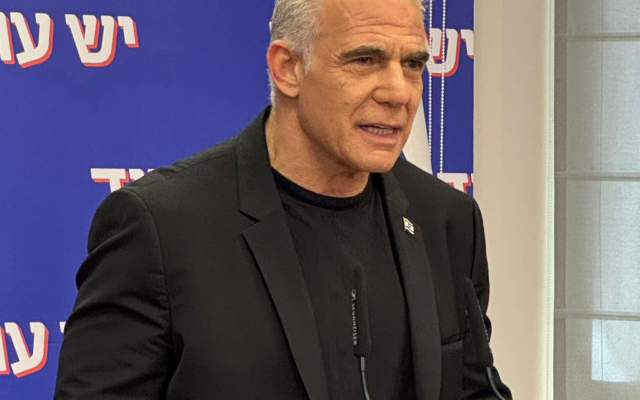
Lapid spoke to reporters ahead of his party’s weekly faction meeting in the Knesset, emphasizing that while the opposition will continue to support Israel’s security forces, it will also speak out against the government’s legislative agenda.
“The way the coalition is behaving is a disgrace,” Lapid said. He added that if the Knesset were dealing with compensation for small businesses or approving assistance for reservists and their families, the opposition would participate willingly, but “that’s not why you opened” the parliament after a period of restricted activity due to the war.
Lapid argued that the government is attempting to exploit the wartime situation to push through divisive legislation. “There is nothing more obvious than the government’s plan, that because of the war we will remain silent, while they dismantle the country. It will not work for them. We will continue to support the security forces, but they will not succeed in silencing us,” he said.
He further criticized the coalition for advancing bills he described as “the most divisive, most polarizing, most destructive laws” during a period of conflict. “The fact that they are bringing these laws in a time of war is disrespect for the people who are sitting in shelters, for the pilots who are operating in Iran, for the fighters in Lebanon,” Lapid said.
Parliamentary debate resumed Sunday after a two-week pause caused by the Iran war. The coalition is pushing through legislation that includes an overhaul of the media market, the separation of the attorney general’s duties, and the establishment of a politically appointed panel to investigate failures surrounding the Hamas-led attack on October 7, 2023.
On Thursday, Knesset Speaker Amir Ohana’s office announced plans to increase parliamentary activity, allowing further discussion of contentious legislation.
Prior to Ohana’s announcement, the government had indicated plans to shelve several unpopular proposed economic reforms and a bill that would exempt yeshiva students from military conscription, according to statements by Prime Minister Benjamin Netanyahu and Finance Minister Bezalel Smotrich.
Despite the shelving of some legislation, the government decided during the war to allocate over NIS 5 billion ($1.6 billion) in discretionary coalition funds to Haredi institutions, West Bank settlements, and other coalition priorities in the 2026 state budget. The move drew significant criticism from the opposition.
Lapid reiterated that the opposition would continue to support the security forces while opposing legislative initiatives he described as harmful and ill-timed amid ongoing conflict.