
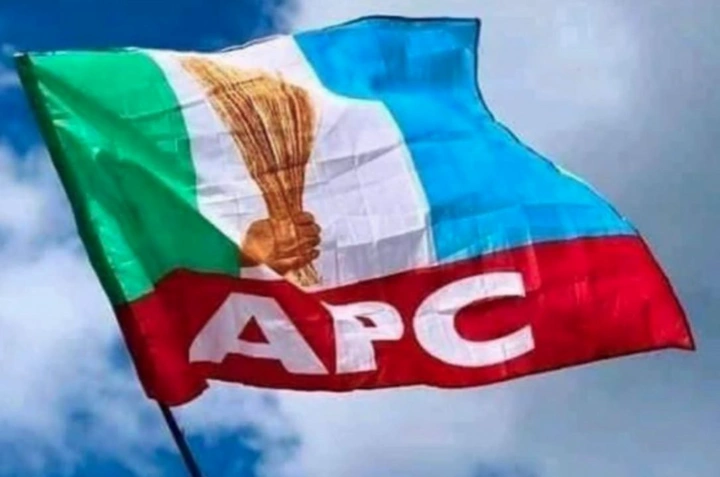
Fresh waves of political defections may be set to unsettle the National Assembly as the ruling All Progressives Congress (APC) holds its national convention at Eagle Square in Abuja, with lawmakers returning from the Eid-el-Fitr break amid heightened speculation over shifting alliances and emerging opposition coalitions.
The convention, which has drawn top party leaders, governors and federal lawmakers, is already being seen as more than a routine gathering.
For many within and outside the APC, it represents a strategic convergence point where loyalties are tested, grievances aired quietly, and future alignments subtly negotiated ahead of the 2027 election cycle.
The timing is significant. The National Assembly is expected to resume plenary on Tuesday, and insiders say the familiar pattern of defections that has characterised recent legislative sessions could intensify as politicians reposition early.
Read also: APC chieftain says Wike most qualified to lead Tinubu re-election campaign
In both chambers, defections have become a recurring feature, often announced at the start of plenary with letters citing “irreconcilable differences” or “division within party structures.” However, beneath those formal justifications lies a deeper game of political survival and access to power.
Several lawmakers, particularly from opposition parties, are believed to be weighing their options, with some already attending APC events or maintaining close contact with party leaders.
The convention provides an opportunity for such lawmakers to signal interest, test reception, and potentially finalise moves.
The APC’s dominance at the federal level continues to make it an attractive destination, especially for legislators seeking political security, committee influence, or alignment with the executive ahead of future elections.
The convention is not just about party administration; it is a marketplace of political interest.
Yet, while the ruling party appears to be consolidating, a parallel development in the opposition space is adding a new layer of intrigue.
Talk of a possible alliance between Peter Obi and Rabiu Musa Kwankwaso of the New Nigeria Peoples Party (NNPP) potentially under the platform of the African Democratic Congress (ADC), has gained traction in recent weeks. Though no formal announcement has been made, the mere speculation is already sending ripples through the political establishment.
The idea of an Obi-Kwankwaso ticket is being framed by some opposition figures as a strategic merger capable of challenging the APC’s dominance by combining regional strengths and voter bases.
Obi’s appeal among urban and youth voters, particularly in the South-East and parts of the South-South, could complement Kwankwaso’s influence in Kano. For lawmakers, this evolving scenario presents both an opportunity and a dilemma.
On one hand, a credible opposition coalition could offer an alternative platform for those reluctant to join the APC but dissatisfied with their current parties. On the other hand, the uncertainty surrounding such an alliance including its structure, leadership and viability may push risk-averse politicians toward the relative stability of the ruling party.
This is a moment of calculation for politicians especially lawmakers.
“Do you move now to the APC and secure your place early, or do you wait and see if a strong opposition coalition emerges? That is the question many lawmakers are asking.
Within the National Assembly, recent months have already seen a steady erosion of opposition ranks, raising concerns about the weakening of legislative checks and balances.
Civil society organisations have warned that continued defections could further tilt the balance of power in favour of the executive, undermining democratic accountability.
The anticipated new round of defections could deepen those concerns, particularly if it involves high-profile lawmakers or significant blocs from opposition parties.
There is also the question of how party leaderships will respond. Opposition parties, already grappling with internal divisions, may find it difficult to stem the tide if members perceive better prospects elsewhere.
Meanwhile, the APC will be under pressure to manage incoming members without exacerbating internal rivalries or alienating existing stakeholders.
At the convention ground, much of this political maneuvering remains behind the scenes, even as public attention focuses on speeches, resolutions and party structure.
However, seasoned observers note that the real significance of such gatherings often lies in the informal conversations and side meetings that shape future developments.
Read also: 2027: Fragmented opposition faces fierce battle against Tinubu as APC tightens grip
As lawmakers prepare to reconvene, the atmosphere in Abuja is one of anticipation. Will the next plenary session open with another wave of defection letters? Will the opposition coalesce around a new platform, or continue to fragment?
For now, the signals are mixed but unmistakable: Nigeria’s political landscape is once again in motion, with the APC convention serving as a catalyst and the National Assembly as the immediate theatre where the consequences will unfold.
The coming weeks will likely determine whether the current drift toward one-party dominance continues, or whether emerging alliances can alter the trajectory.
Either way, the interplay between defections, party strategy, and electoral calculations is set to define the next phase of legislative politics in the country.