
Nigerian students in high schools and colleges now contribute over $800 million annually to the American education system, reaffirming Nigeria’s position as one of the leading sources of international students in the United States.
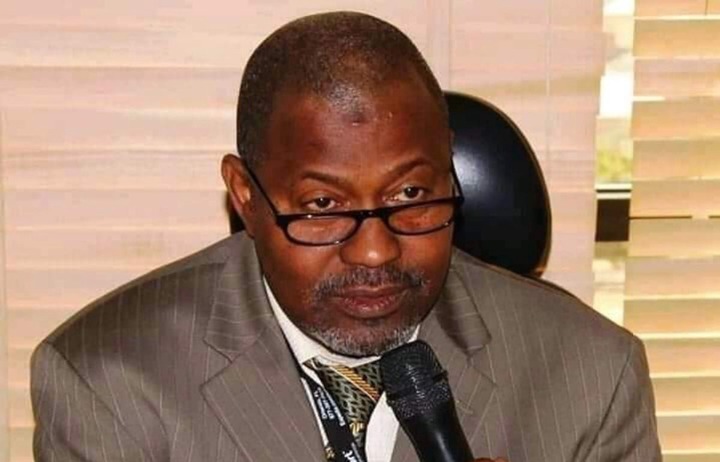
The U.S. cultural attaché, Ms Raisa Duncas, revealed this when she led a delegation of the United States Embassy in Abuja on a visit to the Executive Secretary of the National Universities Commission (NUC), Professor Abdullahi Ribadu.
Duncas led the delegation, including the Education Specialist, Ms Shade Adebayo, to seek the NUC’s intervention on two key issues: recognition of the United States High School Diploma as equivalent to Nigeria’s Senior School Certificate Examination (SSCE) for university admission; and strengthening collaboration with Nigerian universities in developing and implementing Artificial Intelligence (AI) policies.
According to a recent data from Open Doors report, Nigeria has climbed to eighth place among countries sending students to the United States, with 21,847 Nigerians enrolled in American higher institutions in the 2024/2025 academic year. The report indicated a consistent rise in Nigerian enrolment over the past five sessions.
Speaking during the visit, Ms Duncas expressed concern over Nigeria’s non-recognition of the American High School Diploma, whether obtained locally or abroad.
She noted that holders of American High School Diplomas are required to obtain additional qualifications such as those issued by West African Examinations Council (WAEC), National Examinations Council (NECO), or National Business and Technical Examinations Board (NABTEB) before being eligible to sit for the Unified Tertiary Matriculation Examination (Post-UTME) conducted by the Joint Admissions and Matriculation Board (JAMB).
She noted that this requirement has been a source of concern, hence the need for engagement with the Commission. She stated that this requirement had posed consistent challenges for American-trained students, including expatriate children living in Nigeria.
She emphasised that while U.S. universities readily accept Nigerian qualifications, the reverse is not yet applicable.
She, therefore, called for reciprocity to ensure fairness and enhance academic mobility between both countries.
Duncas also commended the strong academic performance of Nigerian students in U.S. schools and universities, stating that their enrolment contributes over $800 million annually to the American education sector.
On AI policy, Ms Duncas requested clarity on Nigeria’s efforts to harmonise AI adoption in universities and expressed interest in partnership opportunities with leading U.S. institutions.
Responding, NUC Executive Secretary, Professor Ribadu, explained that the American High School Diploma is not currently recognised within Nigeria’s qualification framework because it is not yet captured in existing regulatory classifications.
He noted that any qualification seeking official recognition must first be approved by the National Council on Education (NCE), which is chaired by the Minister of Education. Only then can regulatory agencies such as JAMB and the National Board for Technical Education (NBTE) integrate it into their systems.
Ribadu acknowledged differences in curriculum structure between Nigeria and the U.S., noting that alignment is often easier with the United Kingdom due to curricular similarities.
However, he proposed two potential pathways forward: recognition of the U.S. High School Diploma as equivalent to WAEC/NECO, making it eligible for general university admission; or positioning it as a higher-level credential for JAMB Direct Entry, eliminating the need for additional examinations.
He assured the delegation that the NUC is prepared to draft a comprehensive concept memo to guide the evaluation and approval process, subject to extensive stakeholder engagement.
Professor Ribadu disclosed that the NUC had already partnered with U.S.-based DIMLAS Corporation, which has trained Nigerian academics on AI tools.
He added that the commission is finalising its AI Policy for the Nigerian University System (NUS) and remains open to further collaboration that would enhance AI deployment in teaching and learning.
The U.S. delegation pledged to continue consultations with key education stakeholders, including JAMB and the Federal Ministry of Education, to advance the qualification recognition process and AI partnership initiatives.
Several NUC directors were in attendance at the meeting, including officials from Academic Planning, Accreditation, Public Affairs, Research and Innovation, Legal Services, and the Executive Secretary’s Office.