
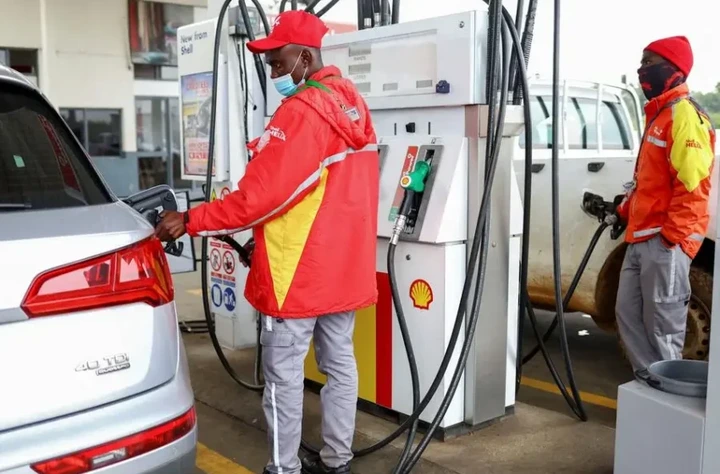
South African motorists may be heading into the new year with rare and welcome relief at the fuel pumps, as strong indicators point to significant petrol and diesel price reductions taking effect next week. Fresh month-end data from the Central Energy Fund (CEF) suggests that January 2026 could open with one of the most notable fuel price cuts in recent times.
According to the latest figures, both petrol and diesel prices are sitting in over-recovery territory, meaning consumers have effectively been paying more than the actual cost of fuel imports. This situation almost always leads to a downward adjustment when the official pricing review is concluded.
What the Data Is Showing
By the close of the fourth week of December, petrol prices were showing an over-recovery of between 59 and 64 cents per litre. Diesel prices, meanwhile, are poised for even sharper cuts, ranging from R1.35 to R1.47 per litre depending on sulphur content. Illuminating paraffin is also expected to become cheaper, with a projected drop of around R1.08 per litre.
These figures strongly suggest that motorists will see noticeable relief when the Department of Petroleum and Mineral Resources announces the official fuel price adjustments. As per South Africa’s regulated pricing system, fuel price changes take effect on the first Wednesday of every month — which, in this case, falls on January 7, 2026.
Why Prices Are Falling
Two key factors are driving the anticipated fuel price cuts: a stronger rand and relatively stable international oil prices.
Over December, the rand continued its impressive rally against the US dollar, strengthening from around R17.23/$ to approximately R16.60/$. This currency gain alone has contributed roughly 20 cents per litre to the expected petrol price reduction. On a broader scale, the rand has gained about 13% against the dollar over the past year, supported by improved local economic sentiment.
Domestically, confidence has been boosted by a credible mid-term budget, a sovereign credit rating upgrade, the relative stability of the Government of National Unity, and South Africa’s removal from the Financial Action Task Force (FATF) grey list. Globally, a weaker US dollar and buoyant commodity markets have further supported the rand’s performance.
Oil prices have also played a decisive role. Brent crude oil lost roughly 20% of its value over the course of 2025, despite periods of volatility. Prices fluctuated between the high $50s and upper $60s per barrel, largely due to persistent oversupply concerns. By the end of December, Brent crude was trading just above $61 a barrel.
Oil Markets Remain Uncertain
While fuel prices are moving in motorists’ favour for now, the global oil market remains unpredictable. Analysts point to continued oversupply driven by increased production from OPEC+ members and rising output from non-OPEC producers. The International Energy Agency has forecast a global oil surplus of around 3.8 million barrels per day in 2026.
Geopolitical tensions, however, could still disrupt the outlook. Developments involving Venezuela, Ukraine, Iran, and renewed US sanctions have the potential to push oil prices higher in the short term. Still, many analysts believe any price spikes may be temporary, with oversupply pressures likely to dominate in the first quarter of the year.
Expected Fuel Price Changes
If current trends hold, motorists can expect the following adjustments from January 7:
Petrol 93 (ULP): Decrease of 59 cents per litre
Petrol 95 (ULP): Decrease of 64 cents per litre
Diesel 0.05% sulphur (wholesale): Decrease of R1.35 per litre
Diesel 0.005% sulphur (wholesale): Decrease of R1.47 per litre
Illuminating paraffin: Decrease of R1.08 per litre
These cuts come as a reversal of December’s fuel hikes, which saw petrol prices rise by 29 cents per litre and diesel increase by as much as 82 cents.
For households, transport operators, and businesses still grappling with high living costs, the anticipated fuel price reductions could offer some breathing room as 2026 begins.
Frequently Asked Questions (FAQ)
When will the new fuel prices take effect?
Fuel price changes are expected to take effect on Wednesday, January 7, 2026.
Why are fuel prices dropping in January 2026?
The expected cuts are driven by a stronger rand and lower international oil prices, resulting in fuel price over-recoveries.
Will diesel prices drop more than petrol prices?
Yes. Diesel is projected to see larger reductions, with cuts of up to R1.47 per litre.
Could fuel prices rise again later in 2026?
Yes. Fuel prices remain sensitive to global oil supply, geopolitical tensions, and currency movements.
Is this price cut officially confirmed?
The final announcement will be made by the Department of Petroleum and Mineral Resources, but current CEF data strongly indicates a cut.