
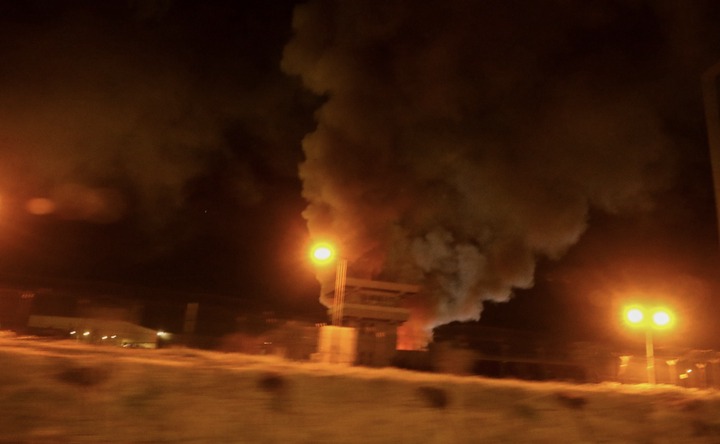
According to a report by The Mirror on Thursday, March 12, 2026, British and American forces stationed in northern Iraq came under attack after a swarm of drones linked to Iran struck a military base housing Western troops, defence officials have confirmed.
The attack targeted an air base in Erbil on Wednesday night, where international forces, including personnel from the British Armed Forces and the United States Armed Forces, are deployed. According to British military officials, a counter-drone team from the United Kingdom successfully intercepted two unmanned aerial vehicles before they could reach the facility. However, several other drones managed to penetrate the base’s defenses and strike the compound.
While no British soldiers were injured during the incident, officials confirmed that some American troops sustained minor injuries following the attack.
The strike was discussed during a briefing at the UK’s military headquarters in north-west London attended by John Healey. Military commanders warned that the tactics used in the attack appear to mirror strategies previously employed by Russia in drone warfare.
Guy Foden, assistant chief of staff for operations at the UK’s Permanent Joint Headquarters, said both Erbil and the Iraqi capital were targeted during the coordinated drone assault.
“Erbil and Baghdad were both struck a number of times last night with increasing coordination,” Foden said. “We have personnel in Erbil who are currently helping with the defence of that base.”
He added that British forces stationed at the base shot down two incoming drones but confirmed that several others successfully struck the camp.
Senior British commanders also warned that Iranian drone operators may be receiving tactical guidance influenced by Russian combat experience.
Nick Perry, the UK’s Chief of Joint Operations, told the defence secretary that Iranian operators had begun flying drones at lower altitudes, a tactic that makes them harder to detect and intercept.