
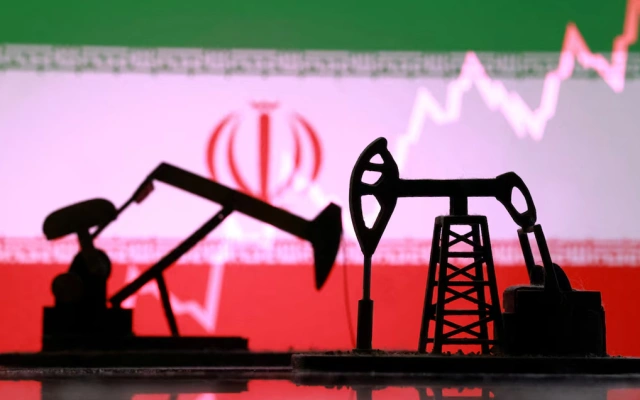
Military power isn’t measured in bombs dropped or leaders eliminated; it’s measured in leverage. For decades, Iran has built its geopolitical leverage on one foundation: oil. Which they are using to export their global Jihad. As of early 2026, Iran produces between 3.5 and 4.5 million barrels of petroleum liquids per day, roughly 4–5% of the global supply. Those barrels fund the Islamic Revolutionary Guard Corps (IRGC), sustain regional militias, and underpin the regime’s ability to project power.
Traditional campaigns aimed at leadership decapitation rarely yield long-term results. Iran’s structure is resilient to personnel losses, but not to an assault on its primary revenue stream. Military strategy has long emphasized exploiting an adversary’s structural weaknesses, and in Iran’s case its dependence on oil may be the critical pressure point.
While Tehran has targeted the world’s energy arteries; from tanker attacks to proxy disruptions, it has largely assumed its own oil infrastructure would remain untouched.
That assumption deserves reevaluation.
Global energy markets are less fragile than they once were. Expanded production from the United States, Gulf allies, and other suppliers has increased the system’s ability to absorb shocks. A temporary disruption of Iran’s share could likely be managed. Meanwhile, depriving Tehran of its oil income—more than 57% of export revenue in 2024 and potentially closer to 75% under tightening sanctions—would cripple the regime’s economic foundation far more effectively than any strike on individual leaders.
Even if Iran’s military apparatus survived an initial conflict, its economy could not withstand the loss of oil revenues. Many lower- and mid-level IRGC members are driven less by ideology than by livelihoods. When the paychecks stop, loyalty dissolves.
In that sense, neutralizing Iran’s oil infrastructure may accomplish what decades of sanctions and limited deterrence have not: force strategic recalibration from within.
One hopes policymakers are thinking in these terms. In warfare, as in diplomacy, the most decisive leverage is not always applied against the head of the adversary—but against the source of its power.