
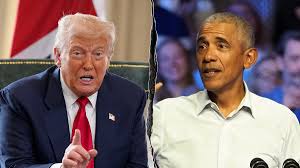
A member of the U.S. Senate Small Business Committee, John Husted, has argued that President Donald Trump is now confronting the long-term consequences of policies implemented under former President Barack Obama, particularly in relation to Iran.
Speaking during an interview on Fox Business on March 17, 2026, Husted framed current U.S. actions in the Middle East as corrective measures aimed at reversing what he described as earlier strategic missteps.
“Barack Obama gave them the money to finance what President Trump is now dealing with,” Husted said, pointing to the broader trajectory of U.S.–Iran relations over the past decade.
Husted’s remarks come at a time of heightened military and geopolitical tensions, with Washington intensifying efforts to curb Iran’s nuclear ambitions, ballistic missile development, and regional influence. The senator suggested that previous diplomatic engagements, including agreements reached during the Obama administration, contributed to conditions that allowed Iran to expand its capabilities.
His comments reflect a long-standing criticism among some U.S. policymakers, who argue that earlier engagement strategies did not sufficiently constrain Tehran’s activities. According to this view, Iran leveraged the economic and diplomatic space created during that period to strengthen its military infrastructure and deepen its involvement in regional conflicts.
The debate has gained renewed urgency amid ongoing operations involving the United States and its allies, as well as concerns over Iran’s ability to project power through proxy groups and strategic waterways such as the Strait of Hormuz. Husted’s framing positions the current administration’s approach as a necessary response to accumulated challenges rather than a standalone policy shift.
At the same time, defenders of the Obama-era strategy maintain that diplomatic efforts were designed to limit Iran’s nuclear program and avoid direct military confrontation, arguing that such agreements provided oversight mechanisms and reduced the immediate risks of escalation.
Husted’s comments underscore the broader partisan divide in Washington over how best to manage Iran’s role in global security. As tensions persist, the competing narratives—whether current actions are corrective or escalatory—continue to shape both domestic political discourse and U.S. foreign policy direction.