
The oil states of the Persian Gulf have made great strides to diversify their economies in recent years, but they have also created a new vulnerability: more strategic targets for Iran to hit.
Outgunned militarily, Iran is wreaking economic havoc in the Middle East by attacking factories that produce aluminum and steel, targeting services such as banking and tourism, and disrupting the region’s trade in products like fruit.
Oil and gas production remains the Persian Gulf’s economic backbone, and Iran’s stranglehold on tanker transits through the Strait of Hormuz has caused the war’s biggest economic dislocations.
But the region’s abundance of cheap energy has also powered a determined pivot by Gulf states into a range of non-oil industries and services that are now also drawing Iran’s fire. And like oil, they resonate globally.
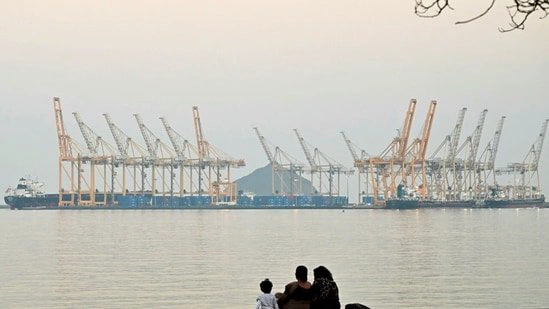
Over the weekend, Iranian drones damaged major aluminum smelting operations in the United Arab Emirates and Bahrain, while hitting port cranes in Oman. Iranian munitions have struck data centers and bank offices, as well as the region’s modern seaports and airports, neutralizing them as trade hubs. On Sunday, the Islamic Revolutionary Guard Corps took aim at education centers, with threats to attack regional campuses of American universities in a fresh escalation of the tit-for-tat attacks on civilian or economic targets that are beginning to characterize periods of the war.
The Gulf has long pursued industries that require loads of cheap energy—Aluminium Bahrain, a giant producer damaged over the weekend, dates to the 1970s. But metals businesses like it, along with fertilizer and chemical enterprises, are now competitive global players because Gulf governments invested in hard and soft infrastructure adjacent to the oil business.
The trend has been supercharged by national strategies such as Saudi Arabia’s Vision 2030 that are aimed at capitalizing on oil wealth—before the crude runs out—by building future-proof industries from finance to tourism.