
The Israel-Iran conflict has entered a dangerous new phase, with attacks on vessels in the strategically vital raising fears of a prolonged global energy crisis.
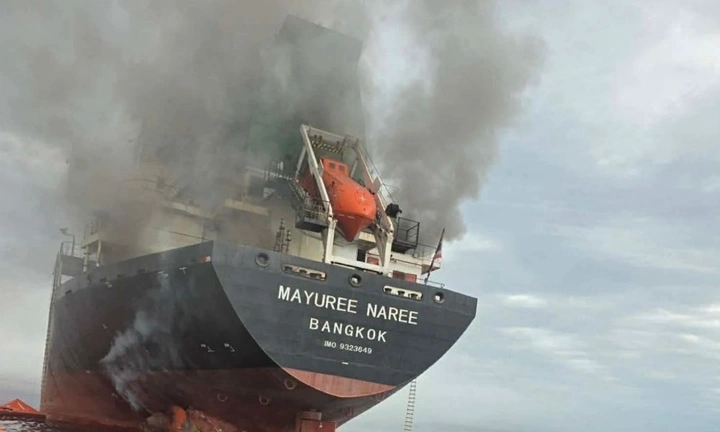
According to Iran’s Islamic Revolutionary Guard Corps (IRGC), two ships were struck after allegedly ignoring naval warnings. A Thai-flagged vessel, Mayuree Naree, suffered an explosion in its engine room, leaving three crew members missing. Another vessel, the Liberian-flagged Express Rome, was also reportedly hit by Iranian projectiles. See More
The United Kingdom Maritime Trade Operations (UKMTO) confirmed that at least 13 vessels have been attacked in the Persian Gulf region since the conflict intensified on February 28. Three incidents occurred in a single day, underscoring the escalating risk to international shipping.
Iranian military officials have warned that any vessel linked to the United States or Israel would be considered a “legitimate target,” signaling a widening maritime confrontation.
Why the Strait of Hormuz Is a Critical Global Chokepoint
The Strait of Hormuz is one of the world’s most important energy corridors. Roughly 20 million barrels of oil per day, nearly one-fifth of global production, pass through the narrow waterway, according to US energy data.
Iran controls the strait’s northern coastline, giving Tehran significant leverage during times of conflict. Analysts warn that even limited disruption can send shockwaves through global markets.
Following the latest attacks, Brent crude prices surged more than 4%, trading above $91 per barrel, while US benchmark WTI climbed toward $87. Concerns over a sustained blockade have outweighed proposals from the International Energy Agency to release strategic reserves. See More