
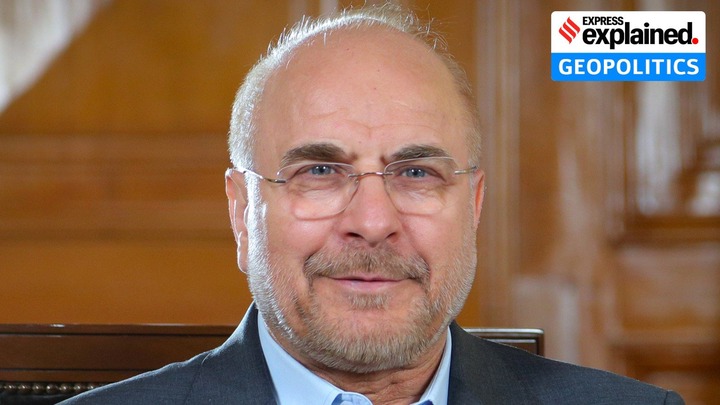
Mohammad Bagher Ghalibaf, Speaker of Iran’s parliament and widely viewed as a “pragmatic hardliner”, has emerged as a consequential political figure with the risky mandate to negotiate peace with the United States. For any Iranian leader, engaging an adversary denounced for decades as the “Great Satan” and one that has inflicted significant military damage on Iran until early this week, is no easy task.
The fragile political context of the US-Iran talks in Islamabad is evident in the last 48 hours, with continuing tensions over Israeli attacks on Lebanon, mixed messages on the negotiating framework, and last-minute uncertainty over Tehran’s participation.
US Vice President J D Vance is on his way and if the talks take place, that very fact will mark an important step forward. Strategic ambiguity, counterintuitively, is useful in finding creative openings in complex negotiations. That Donald Trump has dispatched Vance — apparently at Tehran’s request — signals a seriousness of purpose in Washington.
There has been a tendency in India to read the recent conflict as a T20 match and quickly declare a winner — Iran. But Tehran’s willingness to engage America after absorbing heavy punishment points to a more sobering reality: winning the peace is even more important for Iran in ending its prolonged international economic isolation and addressing the imperatives of post war reconstruction.
Man of the moment
The US-Iran war is better understood as a Test series — a prolonged contest of political wills aimed at resolving a massive number of accumulated disputes. The negotiations at home in both countries will be as hard as the one Washington and Tehran hope to begin in Islamabad.
History offers a clear lesson: major wars reshape politics within and between states. They strain institutions, sharpen elite divisions, and create opportunities for new actors to emerge and redefine national trajectories.
This raises a central question: is Ghalibaf the man of the moment in Tehran?
Story continues below this ad
The nature of the moment is unmistakable. Sustained military pressure and the decapitation of key leadership figures have weakened the clerical establishment’s dominance while expanding the influence of the Islamic Revolutionary Guard Corps (IRGC), which has led Iran’s recent military resistance. Ghalibaf’s challenge is to convert battlefield resilience into long-term strategic gains. Can he do it?
Ghalibaf’s career embodies a central paradox. He is at once a product of the security apparatus who also speaks the language of technocratic governance, economic management, and international engagement in self-interest.
His trajectory is typical of the generation shaped by the Iranian Revolution and the Iran-Iraq War. Born near Mashhad in 1961, Ghalibaf joined the IRGC as a young man during the war and rose through its ranks. These wartime credentials and institutional networks remain the foundation of his political authority.
His 12 years as mayor of Tehran (2005–17) added a second pillar to his profile. The expansion of the metro, the construction of expressways and tunnels, and visible improvements in urban infrastructure helped build his reputation as an effective administrator. He projected himself as a soldier who could also deliver concrete state capacity.
Yet this record is not without blemish: allegations of corruption and his role in the suppression of the 1999 student protests complicate the image of a purely technocratic moderniser. He did not have much luck in the repeated quest for the presidency in Iran.
A balancing act
Ghalibaf’s rise must also be seen in the context of the turbulence in Tehran since February 2026. As Speaker, he already commanded significant institutional leverage; in the current flux, he has emerged as an important centre of authority and a plausible interlocutor for Washington.
There is an enduring political irony here. Ghalibaf’s persona has often been compared to that of Reza Khan, the soldier who seized power in the 1921 coup and declared himself the Shah in 1925. Reza Shah Pahlavi drove Iran’s secularisation and modernisation with an iron hand. Admirers have cast Ghalibaf as a contemporary, Islamist version of a modernising strongman.
For the Trump administration, in search of a credible negotiating partner in Tehran, Ghalibaf may appear a sensible choice. That he was not among those targeted in the US-Israeli strikes against Iranian leadership has fuelled speculation, though it proves little. In any case, being seen as America’s preferred interlocutor is not a happy badge to flaunt in Iran.
Engaging the United States is never easy — either for its partners or its rivals; doing so in the aftermath of a costly conflict makes the task far more demanding. Ghalibaf must balance competing imperatives: projecting tough negotiating posture against the US for domestic audiences while crafting a practical compromise with Washington to advance Iran’s long-term interests.
His detractors will be quick to denounce any perceived capitulation, while Washington will demand strong assurances that any commitments made under the deal are credible and durable.
If Ghalibaf succeeds in securing meaningful sanctions relief without surrendering Iran’s national dignity and fracturing his domestic base, he will demonstrate that Tehran’s security technocrats can manage both war and peace. If he fails, it will not only imperil his own career but also set back the case in Tehran for engagement with the United States.
Ghalibaf’s presence in the delegation marks a potential inflection point. A badly wounded Islamic Republic has sent a soldier-administrator to negotiate with a long-standing adversary. He embodies the core contradictions of Iran’s post-revolutionary order — between ideology and pragmatism, national interest and trans-national revolution, confrontation and accommodation, as well as resistance and reconstruction.
Story continues below this ad
How Ghalibaf manages these contradictions will shape not only Iran’s immediate trajectory, but also the geopolitical evolution of the Gulf and the Middle East.