
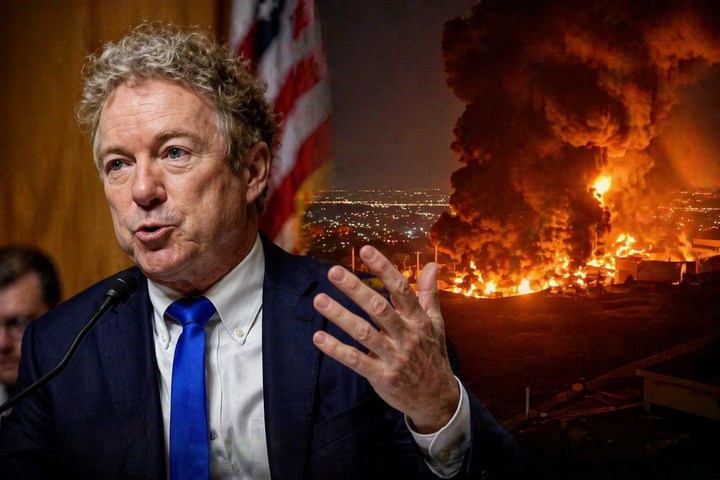
According to a report by Fox News, on Tuesday April 21, 2026, U.S. Senator Rand Paul (R-KY) has issued a sharp warning regarding the efficacy of military pressure in the ongoing standoff with Iran, cautioning that overwhelming force does not guarantee an adversary’s capitulation.
The Senator challenged the assumption that intensified military strikes would inevitably force the Iranian regime into submission.
To illustrate his point, Paul looked to historical precedent, specifically the final stages of World War II. He noted that even after the United States deployed atomic weapons against Hiroshima and Nagasaki, the Japanese leadership remained internally fractured, with a significant portion of the cabinet still advocating for the continuation of the war despite the catastrophic destruction.
Paul’s argument suggests that strategic calculations and internal political dynamics often override the simple math of military destruction.
He warned that policymakers should not assume that pressure campaigns will yield a predictable surrender, as adversaries may find ways to persist even under extreme duress.
This intervention serves as a reminder of the historical complexities of coercive diplomacy. By invoking the World War II era, Paul highlighted the necessity for a more nuanced understanding of an opponent’s resolve, rather than relying exclusively on the potential for kinetic action.
The Senator’s remarks arrive during a period of acute uncertainty in U.S.–Iran relations. As the administration maintains a hardened military posture marked by the deployment of additional carrier strike groups diplomatic efforts remain fragile.
With observers closely monitoring whether scheduled negotiations in Islamabad will proceed, Paul’s historical analogy serves as a cautionary counterpoint to the current strategy of “overwhelming” military capability.