
In every functioning society, the true test of policing is not what happens in elite corridors of influence, but what the ordinary citizen experiences on the street.
For too long, that balance has been distorted.
Recent criticism surrounding the redeployment of officers from Zone 2 Command in Lagos has been framed in sensational terms: mass transfers, alleged illegality, internal discontent. But beneath the noise lies a far more important and uncomfortable truth: Nigeria’s policing structure, particularly in high-interest zones, has been uneven, inefficient, and in urgent need of correction.
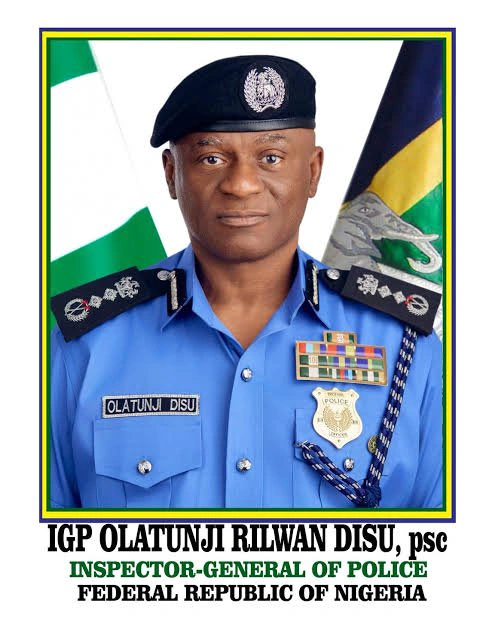
This is the context within which the actions of the Inspector-General of Police, Olatunji Disu, must be understood.
The ongoing exercise is not incidental. It is the direct outcome of a clearly defined restructuring objective under the leadership of the Inspector-General: one that prioritises the even and adequate distribution of personnel for effective policing across the country.
Zone 2 Command, which oversees Lagos and Ogun States, has evolved over time into something beyond its administrative mandate. Rather than functioning strictly as a supervisory and coordination hub, it has become heavily populated, far beyond operational necessity.
In practical terms, this has meant one thing: a concentration of personnel where they are least needed, and a shortage where they are most needed.
While Zone 2 swelled with officers, reportedly far exceeding standard staffing expectations, divisional police stations, community posts, and rural commands have continued to operate below capacity.
The result?
* Slower response times
* Reduced police visibility in neighborhoods
* Overworked officers in understaffed stations
* Communities left feeling exposed
No serious policing system can justify that imbalance.
Security is not theoretical. It is not a concept measured in internal postings or administrative convenience. It is measured in presence: visible, responsive, and accessible.
When citizens say they do not “feel” the police, what they are really saying is simple: the system is not reaching them.
Redistributing personnel is not punishment. It is not arbitrary. It is the essence of operational policing.
This is precisely the thinking driving the current reforms under IGP Olatunji Disu—the deliberate repositioning of the Force to ensure that policing is not concentrated in a few administrative centres, but extended meaningfully to the communities that need it most.
The Inspector-General’s position is therefore not only defensible, it is necessary:
policing must be felt everywhere.
There is also an open secret that cannot be ignored.
Assignments to certain commands, particularly those linked to high-value civil disputes such as land matters, have historically attracted disproportionate interest. The concentration of officers in such zones is not always driven by operational need, but by perceived opportunity.
This distortion has long undermined equitable deployment.
Correcting it requires more than caution; it requires leadership and resolve, both of which are reflected in the current restructuring agenda of the Inspector-General.
Under the Nigeria Police Act, the Inspector-General of Police retains administrative authority over postings and redeployments within the Force.
Transfers are not extraordinary measures. They are routine instruments of:
* Discipline
* Efficiency
* Institutional balance
To label such actions as “illegal” without reference to any breached statute is to substitute sentiment for law.
More importantly, it distracts from the real issue:
Are officers deployed where Nigerians actually need them?
Nigeria is approaching a critical period.
With elections on the horizon, the demand for:
* Crowd control
* Community intelligence
* Rapid response capability
will increase significantly.
A police force clustered in administrative zones cannot meet that demand.
Lagos needs officers.
Ogun needs officers.
Communities need presence, not paperwork.
There is also a deeper dimension often ignored in public discourse; the welfare of officers themselves.
Overconcentration in some commands and understaffing in others creates:
* Burnout in frontline stations
* Irregular shifts
* Mental fatigue
* Reduced effectiveness
A properly distributed force, one of the core objectives of the current restructuring led by IGP Olatunji Disu allows for:
* Structured shifts
* Better rest cycles
* Improved mental health
* Higher operational efficiency
This is not just about deployment. It is about sustainability.
It is worth noting that previous leaderships have attempted to decongest Zone 2. Those efforts faltered, not because they were wrong, but because they lacked the consistency and institutional backing required to see them through.
Reform, by its nature, is disruptive.
But disruption is not dysfunction.
It is often the first step toward order.
The debate, therefore, should not be:
“Why are officers being transferred?”
The real question is:
Why were so many officers concentrated in one administrative zone while communities remained under-policed?
Until that question is answered honestly, resistance to reform will continue to masquerade as concern.
At its core, policing exists for one purpose: to protect the public.
Not selectively.
Not strategically for advantage.
But universally.
If restructuring ensures that:
* more officers are on the streets,
* more communities are covered, and
* more citizens feel safe,
then it is not just justified, it is imperative.
The common man does not measure policing by internal postings.
He measures it by presence.
And under the current reform-driven leadership, that presence is being deliberately, and necessarily, restored.