
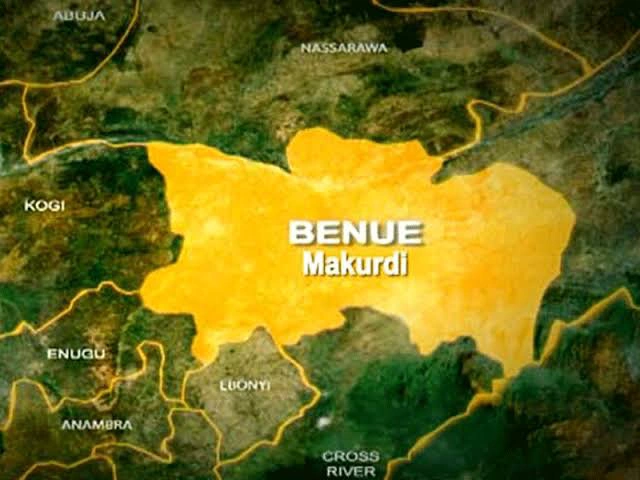
In a nation that habitually measures its maritime ambitions by coastal horizons, an urgent and practical alternative now presses for attention: an inland river port on the River Benue at Makurdi. The Nigerian Shippers’ Council has endorsed the idea and the federal government has signalled support for inland waterways, approving about ₦14.6 billion for modern boats and ferries across states including Benue. Spanning roughly 1,400 km and draining a basin of 319,000 km², the Benue is a naturally navigable tributary of the Niger that links to Onitsha, Port Harcourt and ultimately the Atlantic. Unlike proposed deep‑sea ports that demand multi‑billion‑naira dredging and coastline infrastructure, Makurdi can leverage existing waterways and modest terminal works. This is not a parochial bid for state prestige; it is a strategic pivot that could reconfigure north–south trade, revive agro‑industry in the “Food Basket of the Nation,” and relieve chronic pressure on Lagos terminals.
Lessons from abroad make the case concrete. The Paraguay–Paraná Waterway transformed a landlocked Paraguay into a regional trade hub, growing cargo from 0.7 million tonnes in 1988 to more than 36 million tonnes today. Brazil’s Amazon waterways and Vietnam’s Mekong Delta illustrate how integrated river networks can carry vast agricultural volumes, lower logistics costs, and support industrial clusters. India’s recent revival of inland waterways demonstrates tangible truck‑to‑barge substitution: a single vessel on National Waterway 57 replaced 23 truckloads of cement along a 300‑kilometre route in 2025. Even fragile economies use rivers effectively; Bangladesh moves about 76 million tonnes annually on its river network. These examples are not ornamental parallels. They are practical templates showing that waterways, when integrated with rail and coastal ports and backed by clear policy, can become the backbone of an interior export economy.
The economic calculus for Makurdi is compelling. Road haulage dominates north–south cargo in Nigeria and is expensive, slow and damaging to perishable produce. Nationally, over 90 percent of port cargo moves by road while barges handle roughly 7 percent and rail just 3 percent. The maritime sector hemorrhages value through demurrage, storage and corridor inefficiency; some estimates put annual losses in the billions of dollars. Barging, by contrast, is cheaper per tonne‑kilometre and gentler on goods; industry figures suggest savings of 30–50 percent over road haulage for bulk commodities. For Benue’s farmers, traders and processors this means higher margins, lower post‑harvest losses and stronger incentives to scale production; for consumers, it means lower prices and greater food security.
Beyond direct transport savings, an inland port would catalyse value‑adding infrastructure: logistics parks, cold chains, warehousing, processing facilities and an export/import processing zone (EPZ) clustered around terminals. Benue has abundant land and a proposed MKD–Port Harcourt rail link that can physically integrate terminals with higher‑capacity freight movement. The Port Harcourt–Maiduguri Eastern Rail Line, of which the MKD segment is a part, enjoys presidential-level backing and the Port Harcourt–Aba stretch is already operational. If terminals, rail and river services are planned in concert, Makurdi can retain value locally rather than allowing produce and cargo to leak through southern ports or transit via neighbouring countries. That value retention would create jobs in aggregation, processing and logistics, expand the state’s taxable base and could transform Benue’s economic profile: the state accounts for over half of Nigeria’s yam output, yet its GDP and internally generated revenue remain modest—evidence of value leakage the port could help plug.
Operational realities require disciplined planning. The Benue’s navigability varies seasonally; feasibility studies must prioritise hydrological mapping, seasonal corridor design and river monitoring rather than defaulting to heavy dredging. Shallow‑draft barges, flexible scheduling and navigation aids can keep the corridor reliable without prohibitive coastal‑port costs. Intermodal integration is decisive: the economics of moving high volumes depend on efficient rail–river transloading and streamlined customs. The Nigerian Shippers’ Council, Federal Inland Waterways Authority and the Federal Customs Service must establish inland transshipment protocols, bonded terminal frameworks and expedited procedures so the Makurdi route is competitive on both time and cost.
Institutional leadership will determine success. The federal government should integrate Makurdi into national multimodal transport planning and extend the same regulatory fast‑track and seed support applied to coastal projects. The Shippers’ Council must turn its endorsement into technical standards and operational support. At state level, the Budget and Economic Planning Commission must lead policy architecture and PPP frameworks while the House of Assembly expedites enabling legislation on land tenure, tax incentives and environmental approvals. The Benue Chamber of Commerce and the Benue Shippers Association should mobilise private‑sector demand and secure offtake commitments from major commodity buyers. Central to execution is the Benue Investment and Property Company (BIPC), led by MD Raymond Asemakaha Jr., which should act as the state’s strategic commercial vehicle—co‑investing in terminal real estate, structuring concession models that protect state equity, developing logistics parks and integrating the port with an EPZ to ensure local ownership of logistics assets.
Financing can follow a pragmatic, staged model. Early technical work and pilot operations are best funded by concessional finance and donor technical assistance to de‑risk the project. A PPP concession that separates terminal real estate (state or BIPC‑held) from operations (private terminal operator) will attract expertise and capital. Blended finance—combining BIPC equity, DFI loans, private capital and federal guarantees—can close the funding gap. Sequencing over two to five years is realistic: feasibility and environmental studies in year one; pilot barge operations and an initial terminal in years two and three; rail integration, cold chains and logistics park expansion in years three and four; full EPZ activation and scaled terminals by year five.
Politics matters as much as engineering. A focused advocacy campaign that foregrounds national gains—reduced Lagos congestion, lower food prices, repatriated trade and rural development—must accompany the technical agenda. The Shippers’ Council’s endorsement is the opening to secure ministerial buy‑in; BECCIMA and the Benue Shippers Association must lock in private buyers and anchor tenants while BIPC publishes a clear investment plan to sustain momentum.
If Paraguay, a landlocked nation, can move 36 million tonnes annually via river, there is no reason Nigeria’s “Food Basket” cannot use the Benue to reshape its trade destiny. Makurdi’s inland port is not a sentimental local project; it is a cost‑effective, strategically superior instrument for unlocking northern and central Nigeria’s agro‑industrial potential. With federal certification, clear institutional roles, demand‑led private participation and disciplined commercial structuring under BIPC’s leadership, Makurdi can become an operational inland hub within five years—shifting cargo flows, raising rural incomes, creating industrial jobs and easing pressure on coastal ports. Those outcomes deserve urgent placement atop Benue’s economic agenda and prompt federal consideration.