
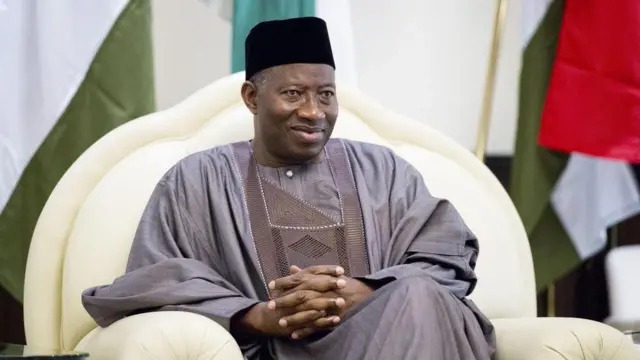
The Federal High Court sitting in Abuja has ruled that former President Goodluck Jonathan is constitutionally eligible to contest the 2027 presidential election, in a judgment that is expected to reignite political discussions about his possible return to the presidency. The ruling was delivered by Justice Peter Lifu on Tuesday, May 26, 2026, and has since been reported by Premium Times, Punch Nigeria, ThisDay, Blueprint, Daily Post, and several other credible Nigerian news outlets.
Justice Lifu held that there was no legal impediment preventing Jonathan from seeking a return to the presidency, and further ruled that the issue surrounding his eligibility had already been settled by both the Federal High Court in Yenagoa and the Court of Appeal. On that basis, the court dismissed the fresh suit challenging his possible candidacy, describing it as frivolous and an abuse of the court process.
“I am bound by the above decision of the Court of Appeal and this court. I have no more to add,” Justice Lifu said during the judgment, as reported by Premium Times and ThisDay.
In addition to dismissing the suit, the court awarded a N20 million fine against the plaintiff in favour of Jonathan, and a separate N1 million fine in favour of the Attorney-General of the Federation. The fines underscored how seriously the court viewed the decision to refile a matter that had already been conclusively determined by superior courts.
The case, marked FHC/ABJ/CS/2102/2025, was filed by an Abuja-based lawyer, Johnmary Jideobi, who argued that Jonathan was constitutionally barred from contesting because he had already taken the presidential oath of office on two separate occasions. The plaintiff relied on Sections 1(1), (2), (3), and 137(3) of the 1999 Constitution of the Federal Republic of Nigeria, arguing that Jonathan had already exceeded the constitutional limit for the presidency.
He also sought an order restraining Jonathan from presenting himself to any political party for nomination ahead of the 2027 election, and requested that the Independent National Electoral Commission be stopped from accepting or publishing his name as a presidential candidate. The suit additionally sought an order directing the Attorney-General of the Federation to enforce any judgment delivered by the court, according to court documents reported by Blueprint and Daily Post.
The core of the plaintiff’s argument, as contained in the affidavit supporting the suit, was that if Jonathan contested and won the 2027 election, he would exceed the constitutional limit of eight years in office. This was because Jonathan completed the tenure of the late President Umaru Musa Yar’Adua after he died in 2010, before going on to win the 2011 presidential election in his own right. The plaintiff further argued that another inauguration in 2027 would amount to Jonathan taking the presidential oath for a third time, which he contended would be unconstitutional.
The court also held that the plaintiff lacked the legal standing, known as locus standi, required to institute the action in the first place. Justice Lifu noted that Jideobi had not suffered any personal loss from Jonathan’s perceived intention to contest the 2027 election, which further undermined the basis of the suit, as reported by Premium Times and Punch Nigeria.
Additionally, Justice Lifu dismissed a motion filed by Jideobi seeking the judge’s withdrawal from the case, also describing that motion as frivolous, according to reports by ThisDay and Blueprint.
The ruling removes what would have been a significant legal obstacle for Jonathan, should he choose to seek the presidency again. It does not, however, confirm that he is running. Jonathan has not made any public declaration of intention to contest the 2027 election, though his name has circulated in political conversations for some time. Daily Post reported last week that a faction of the Peoples Democratic Party, under the leadership of Kabiru Tanimu Turaki, had offered Jonathan a waiver as the party’s only presidential candidate, a development that added further fuel to the speculation.
Goodluck Jonathan became Nigeria’s president in May 2010 following the death of President Umaru Musa Yar’Adua, under whom he had served as vice president. He subsequently won the 2011 presidential election and served until May 2015 after losing his re-election bid to the All Progressives Congress candidate, Muhammadu Buhari. Since leaving office, Jonathan has remained active in African political and diplomatic circles, serving as an election observer and mediator in several countries across the continent.
The constitutional question at the heart of this case, specifically whether completing a predecessor’s term counts toward the two-term limit, is not unique to Nigeria. Similar debates have arisen in other presidential democracies across Africa. The Court of Appeal’s earlier position, which Justice Lifu cited as binding, appears to have settled the matter in Jonathan’s favour, at least at the trial court level.
Whether the plaintiff will appeal the ruling remains to be seen. For now, the judgment clears the legal path for Jonathan to contest in 2027 if he chooses to do so, and that alone is enough to keep his name firmly at the centre of Nigeria’s political conversation.
This report is based on verified coverage from Premium Times, Punch Nigeria, ThisDay, Blueprint, Daily Post, and the News Agency of Nigeria. Constitutional references are drawn from the 1999 Constitution of the Federal Republic of Nigeria as amended.