
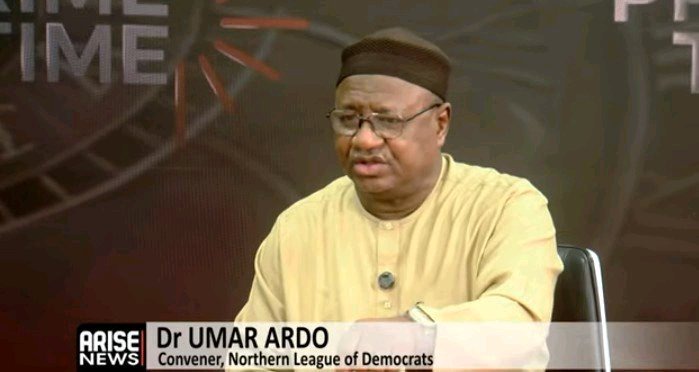
The Convener of the Northern League of Democrats, Umar Ardo, has downplayed claims that former Rivers State Governor, Rotimi Amaechi, was the key political force behind the 2015 presidential victory of former President Muhammadu Buhari.
Ardo made the clarification during an interview on Arise News on Tuesday, May 26, 2026, where he discussed the political arrangements that led to the historic defeat of the Peoples Democratic Party (PDP) after 16 years in power.
While acknowledging Amaechi’s importance in the campaign structure, Ardo said the former governor’s contribution was mainly administrative and financial rather than directly influencing electoral outcomes.
According to him, Amaechi, who served as Director-General of the Buhari Presidential Campaign Organisation, helped with coordination, logistics, and fundraising, but did not deliver significant vote blocs that determined the election outcome.
“Amaechi brought in the logistics and funding but he did not bring in the election votes,” Ardo said during the interview.
He argued that the real foundation of Buhari’s victory was the political alliance that brought together major regional forces under the All Progressives Congress (APC), particularly the partnership between Buhari and then-Lagos political leader, Bola Ahmed Tinubu.
Ardo maintained that the merger that formed the APC, along with the consolidation of political structures across the North and South-West, had already created a strong opposition platform before Amaechi formally joined the campaign.
He further explained that the 2015 victory was the product of long-term coalition building rather than the effort of any single individual, stressing that the combined influence of Buhari’s northern support base and Tinubu’s political network in the South-West played a decisive role.
The remarks add to ongoing debates within Nigerian political circles about who should be credited for the opposition’s first successful takeover of power from an incumbent party in the country’s Fourth Republic.
The conversation also reflects renewed political positioning ahead of the 2027 general elections, as politicians and analysts revisit past alliances and contributions that shaped Nigeria’s electoral history.