
The Independent National Electoral Commission (INEC) has raised serious concerns that recent court decisions interfering with parts of its timetable and schedule of activities for the 2027 general elections may disrupt ongoing preparations if not urgently clarified by higher courts.
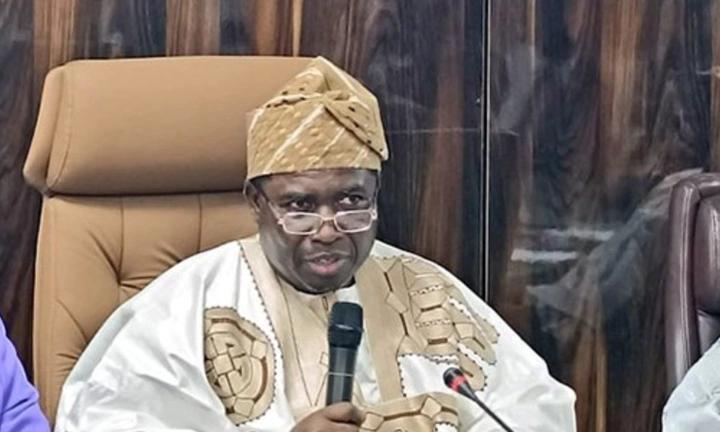
The warning was issued on Tuesday by the INEC Chairman, Prof. Joash Amupitan, during the Commission’s second quarterly consultative meeting with leaders of registered political parties held in Abuja. According to him, the Commission is already facing legal uncertainty following conflicting judicial interpretations that could affect the planning framework for the next general election cycle.
Amupitan revealed that INEC has formally filed appeals against two separate judgments delivered by the Federal High Court, which questioned the legality and validity of certain compressed timelines contained in the Commission’s approved election schedule.
He explained that while the Commission fully respects the authority of the judiciary, the recent rulings have created complex legal questions around the extent of INEC’s constitutional and statutory powers to design, coordinate, and regulate electoral activities in Nigeria.
In one of the cases, Suit No. FHC/ABJ/CS/517/2026, between the Youth Party and Independent National Electoral Commission, delivered on May 20, 2026, the court examined and questioned some aspects of the timetable released for the 2027 general elections. In a separate but related case, Suit No. FHC/ABJ/CS/720/2026 involving the Social Democratic Party (SDP) and INEC, delivered on May 26, 2026, the court upheld INEC’s authority to issue an electoral timetable but struck down certain provisions relating to nomination and substitution deadlines for candidates.
According to the judgments, while INEC retains constitutional powers to set election schedules, it cannot rely solely on administrative guidelines to shorten or override statutory timelines that are already guaranteed to political parties under Nigeria’s electoral legal framework.
The rulings have now triggered concern within the Commission, which believes that conflicting interpretations could undermine the stability and predictability required for a smooth election process.
Amupitan stressed that the Commission’s timetable is built on interconnected administrative processes that are essential for the proper conduct of elections. He noted that these processes are not isolated activities but part of a broader operational chain designed to ensure transparency, credibility, and efficiency.
He further explained that although the Electoral Act provides timelines for some electoral activities, many other critical operational steps are not explicitly stated in law but must still be carried out within a structured framework. These include the submission and verification of party membership registers, monitoring of political party primaries nationwide, uploading of nominated candidates on official INEC platforms, printing of sensitive election materials, training of ad hoc staff, voter education campaigns, and deployment of logistics and technology systems for elections.
According to him, without a harmonized and coordinated timeline, these activities could become disorganized, leading to uncertainty that may ultimately affect the credibility of the electoral process.
Amupitan also highlighted the logistical realities facing election management in Nigeria, pointing out that environmental conditions, terrain challenges, procurement of sensitive materials, and the deployment of election technology such as the Bimodal Voter Accreditation System (BVAS) all require careful planning and strict scheduling.
He maintained that election management is not only a legal exercise but also an operational and logistical undertaking that demands precision, coordination, and predictability.
“The absence of coordinated timelines for such activities would create uncertainty, disrupt election planning and undermine the Commission’s constitutional responsibility to organise, undertake and supervise elections in an efficient and credible manner,” he stated.
He added that INEC has therefore deemed it necessary to pursue appellate review in order to obtain authoritative judicial clarification that would provide certainty for both the Commission and political actors ahead of the 2027 elections.
Despite the ongoing legal disputes, the INEC Chairman reassured political parties and Nigerians that the Commission remains committed to conducting free, fair, and credible elections in full compliance with the Constitution, the Electoral Act, and all binding judicial decisions.
He emphasized that INEC will continue to engage stakeholders constructively while awaiting final pronouncements from higher courts to resolve the legal ambiguities surrounding the disputed timelines.
Meanwhile, the National Chairman of the Inter-Party Advisory Council (IPAC), Dr. Yusuf Mamman Dantalle, also spoke at the meeting and expressed concern over the current structure of Nigeria’s electoral laws, particularly the provisions governing political party primaries.
Dantalle argued that the exclusion of indirect primaries from the electoral framework has created significant challenges for political parties during candidate nomination processes for the 2027 elections. He explained that the restriction limiting parties to either direct primaries or consensus arrangements has intensified internal party conflicts and administrative difficulties.
According to him, the implementation of Section 84(2) of the Electoral Act 2026 has placed political parties under pressure, forcing them into rigid nomination procedures that do not always reflect internal realities or accommodate diverse aspirants.
He noted that many parties were compelled to adopt consensus arrangements even when multiple aspirants had already purchased nomination forms and expressed strong interest in contesting elections.
In several instances, he said, aspirants were persuaded or pressured to withdraw in favor of candidates backed by party leadership, leading to dissatisfaction, grievances, and subsequent legal disputes in some cases.
Dantalle also observed that while some aspirants accepted the outcomes in the interest of party unity, others challenged their exclusion, insisting that genuine consensus must be voluntary, transparent, and inclusive rather than imposed.
He further explained that in an attempt to manage the limitations of direct primaries, some political parties allegedly restricted access to nomination forms or failed to properly publicize primary schedules, actions which he said contributed to mistrust and internal disagreements.
He described these developments as unintended consequences of the current legal framework governing party nominations and internal democracy.
The IPAC chairman therefore called on the National Assembly to urgently review and amend the Electoral Act 2026 to restore flexibility in the conduct of party primaries, arguing that such reforms are necessary to strengthen internal democracy within political parties and reduce post-primary litigation.
He also raised concerns about the tight deadlines given to parties for submitting updated membership registers, including National Identification Number (NIN) details, noting that administrative and logistical constraints led to the exclusion of some genuine members.
Dantalle recalled that IPAC had earlier warned about these potential challenges during its February 2026 General Assembly in Abuja, where it urged lawmakers to reconsider the removal of indirect primaries from the electoral system.
He said recent developments have confirmed those earlier warnings and further demonstrated the need for urgent legislative intervention to avoid recurring electoral disputes.
Political observers note that the ongoing legal and political debates surrounding election timelines and party nomination processes could have wider implications for preparations ahead of the 2027 general elections if not properly resolved.
As reported by FirstTV Online, stakeholders continue to call for urgent collaboration between the judiciary, legislature, and electoral authorities to ensure stability and prevent last-minute disruptions to the electoral calendar.
In summary, INEC is facing legal uncertainty over court rulings that question parts of its 2027 election timetable, while political parties are also struggling with internal challenges linked to nomination rules under the current electoral law. Both INEC and IPAC are now calling for judicial clarification and legislative reform to stabilize the electoral process ahead of 2027.