
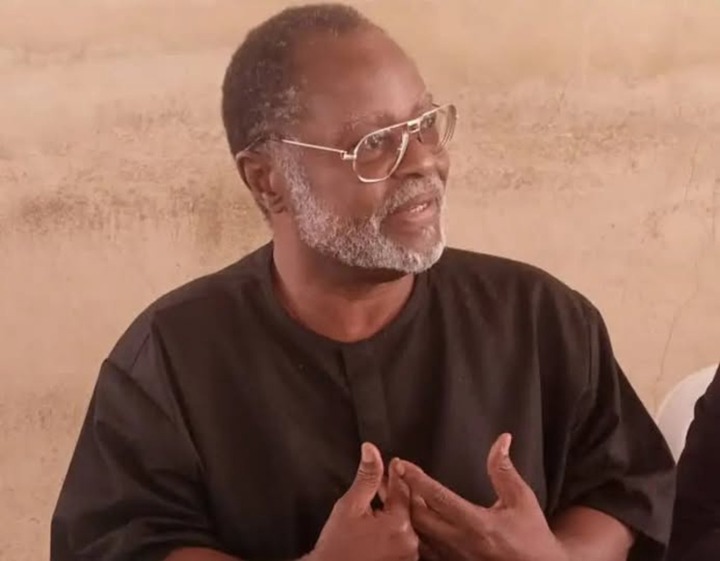
According to a report by Daily Post on Friday, June 12, 2026, Prof Udenta O. Udenta, Fellow of the Abuja School of Social and Political Thought, has raised concerns about the trajectory of Nigeria’s democratic and electoral process, arguing that successive election cycles in the country have consistently delivered increasingly poor outcomes.
He made the remarks while reflecting on the state of governance and democratic practice in Nigeria, noting that expectations of improvement in electoral performance have not been met over time.
He stressed that rather than producing better governance results, each cycle appears to deepen existing political and structural challenges.
He further explained that Nigeria’s election cycles, instead of serving as a platform for progressive democratic consolidation, have repeatedly generated outcomes that fall short of public expectations.
According to him, the pattern suggests a continuing decline in the quality of leadership selection and governance output.
He maintained that the persistence of such results raises critical concerns about the effectiveness and design of the country’s current democratic framework, as well as how elections are conducted and interpreted within the political system.
The academic also argued that the democratic system operating in Nigeria is not rooted in indigenous political traditions or historical evolution.
He stated that it is a model introduced from external environments and later adopted within the country without being organically developed from local social, cultural, and political experiences.
In his assessment, this imported structure has been integrated into Nigeria’s governance system in a way that does not fully align with the country’s realities.
Udenta made these remarks during an interview appearance on Trust TV on Friday, where he engaged in a discussion focused on democratic governance, political development, and electoral outcomes in Nigeria.
The conversation examined broader issues affecting the country’s political institutions and the implications of adopting democratic systems that are perceived to lack local grounding.
His comments were situated within a wider reflection on the performance of democratic governance in the country.
The discussion also coincided with Nigeria marking 27 years of uninterrupted democratic governance, a period that began with the country’s return to civilian rule.
The milestone served as a moment of national reflection on the progress made within the democratic system and the persistent structural and institutional challenges that have emerged over nearly three decades of continuous electoral governance.
The anniversary provided context for examining how democratic institutions have functioned over time.
He added that the disconnect between the imported democratic framework and Nigeria’s socio-political environment continues to shape the recurring challenges observed in governance and electoral outcomes.
According to him, this misalignment has contributed to persistent difficulties in achieving stable and effective governance structures that adequately reflect citizens’ expectations and lived realities.
He maintained that the system continues to operate in a way that struggles to fully integrate with local conditions.
He said: “Every election cycle in this democracy produces the worst outcome. It is not our democracy. It is not homegrown and not something indigenous to us. It didn’t evolve from our lived experiences.
“This is something we imported, and we are forcing that importation into our space, and expect that to work well.