
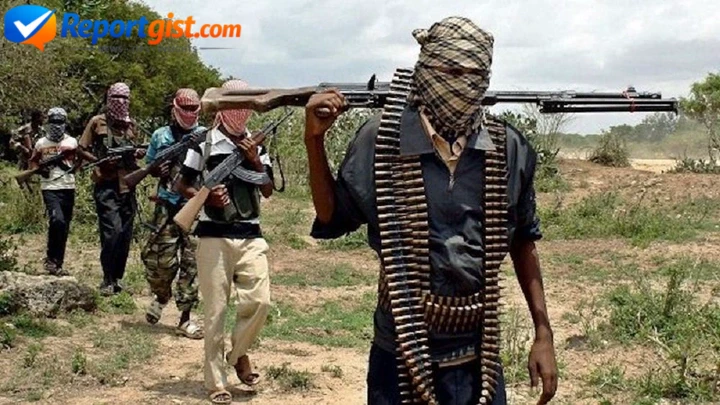
A 56-year-old woman who escaped from a notorious kidnap gang after spending one month and nine days in captivity has alleged that some security personnel leaked information to the kidnappers whenever security operations were about to begin, allowing the criminals to evade arrest.
The survivor, who spoke to THE WHISTLER days after regaining her freedom, claimed that each time security helicopters approached the forest, the kidnappers would receive advance warning from a “mole” within the security system.
“Whenever security men were coming with helicopters, somebody among the security people would call the bandits ahead of time. They would immediately switch off all their phones so they could not be tracked,” she said.
“They would gather all the cooking pots and other things we were using, hide them and relocate us to another place before the helicopter arrived.”
According to her, the kidnappers also believed the helicopters were conducting fake bombardments rather than genuine rescue missions.
“When the helicopter came, they would start dropping different kinds of iron that made loud noises, pretending they were dropping bombs,” she alleged.
The woman was among more than 30 passengers abducted on May 31 along the Obajana axis of Kogi State while travelling from Akure, Ondo State, to Abuja.
She recalled that the convoy of vehicles, including the 18-seater bus she boarded, came under attack around 2:00 a.m.
“Our 18-passenger bus was attacked together with other vehicles around 2 a.m. We were all taken into the bush,” she said.
The visibly frail woman, whose prolonged captivity left her with severely swollen legs, described the kidnappers as a large group of more than 100 armed men, many of whom she said were teenagers and children.
“The gunmen were more than 100. Most of them were below 20 years old,” she said. There was even a nine-year-old boy who always beat me,” she recounted.
The victim said the kidnappers initially demanded ₦4 million and a motorcycle as ransom for each captive.
“They demanded ₦4 million and one motorcycle for each person. Many families paid the ₦4 million but could not provide the motorcycle. Those people were not released,” she said.
She eventually escaped alongside a 19-year-old female captive.
“We escaped together and trekked through the bush for five days before we emerged behind the Dangote industry. Workers there rescued us and handed us over to the police,” she said.
She also disclosed that the driver of the commercial bus had warned passengers about the dangers of travelling on the route before the attack.
“Our driver warned us earlier that the road was dangerous, but after we escaped and trekked through the bush, we never saw him again. He disappeared,” she added.
The survivor’s allegations, if verified, raise fresh concerns about possible information leaks during anti-kidnapping operations and the growing sophistication of armed gangs operating along major highways in Nigeria’s North-Central region.
THE WHISTLER could not independently verify her claims that security operatives tipped off the kidnappers before helicopter operations.
Kogi highway has become one of Nigeria’s most dangerous routes, with armed bandits frequently ambushing commercial vehicles and abducting passengers for ransom.
Kogi State has continued to witness a surge in highway kidnappings, with several deadly attacks recorded across major roads in the state over the past three years despite repeated security operations and rescue missions.
The recurring incidents have heightened concerns over the safety of motorists using the state’s highways, which link Nigeria’s North, South, East and the Federal Capital Territory.
According to publicly available reports, several kidnapping incidents have been recorded in 2026 alone.
On July 9, 2026, gunmen intercepted a vehicle conveying a corpse for burial along the Ochadamu-Ejule Highway and abducted nine people, including two officials of the Federal Road Safety Corps (FRSC).
Earlier, on June 1, armed men mounted a roadblock on the Ayegunle-Bunu Road in Kabba-Bunu Local Government Area, abducting several travellers. Troops pursuing the attackers later rescued 23 victims, although two people were reportedly killed during the attack.
On February 9, suspected kidnappers ambushed three vehicles along the Aloma-Ejule Road and abducted 10 passengers.
The attacks were preceded by a series of kidnappings in 2025.
In November 2025, troops rescued 21 passengers abducted after gunmen attacked multiple vehicles on the Osokoko-Obajana Highway in Lokoja Local Government Area.
On November 10 of the same year, more than 20 people were kidnapped after gunmen reportedly ambushed five buses on the Ayere-Kabba Highway in Ijumu Local Government Area, an incident that drew nationwide attention.
On October 25, 2025, four persons were kidnapped along the Koro Road in Yagba West Local Government Area.
A month earlier, on September 10, gunmen intercepted a 17-seater commercial bus travelling from Osun State to Abuja on the Obajana-Lokoja Road. The Nigerian Army later rescued all 17 passengers.
The wave of kidnappings also extended into 2024. In early December 2024, nine residents were abducted from their homes during a night raid on a community in the state.
On February 3, 2024, gunmen kidnapped 14 passengers travelling in vehicles belonging to GIGM and ABC Transport on a Kogi highway.
In another incident that month, eight passengers travelling from Kabba to Lokoja were abducted after their vehicle was intercepted along the Oshokoshoko-Obajana-Lokoja Road.
Earlier in January 2024, security operatives rescued 21 travellers who had been kidnapped along the Ajaokuta-Itobe Road two days after they were taken captive.
Kogi occupies a strategic location in Nigeria, sharing boundaries with 10 states, including the Federal Capital Territory. Security experts have repeatedly attributed the persistent attacks to the state’s vast forests and difficult terrain, which provide hideouts for criminal gangs operating along major highways.
Although security agencies have recorded several rescue operations and arrests, the repeated attacks underscore the continuing threat posed by kidnappers on Kogi’s highways and the challenges of securing one of Nigeria’s busiest transit corridors.