
According to a report by CNN on Wednesday May 27, 2026, the ongoing military operations linked to the conflict involving Iran are placing significant pressure on the United States defence budget, with senior Pentagon officials warning that funding constraints are beginning to affect routine training, maintenance, and readiness across several branches of the armed forces.
Military leaders have told lawmakers that the sustained operational demands are forcing the Pentagon to divert resources away from standard training cycles, prompting renewed appeals to Congress for additional funding support.
The U.S. Navy’s top officer, Admiral Daryl Caudle, told members of the House Armed Services Committee earlier this month that the service’s 2026 budget did not account for what he referred to as “Operation Epic Fury,” resulting in unplanned strain on routine activities.
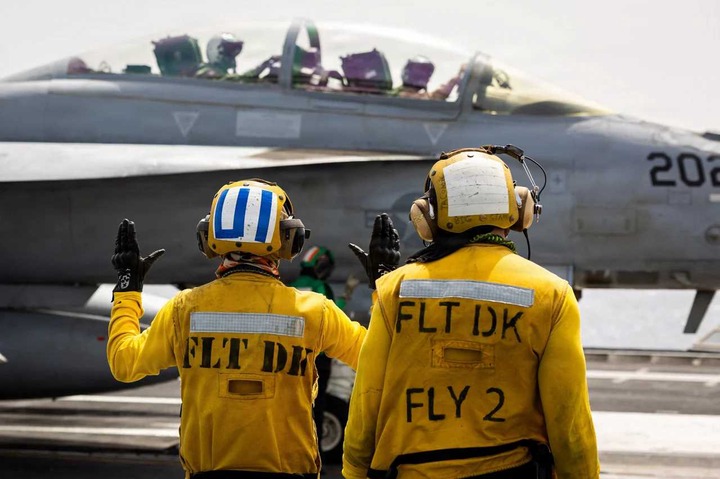
According to Caudle, the financial pressure has already led to adjustments in operational planning, including reduced training schedules for sailors, fewer flight training hours for naval aviators, and scaled-back preparation for new recruits.
“My record recruiting is going to be thwarted without additional funding to move those individuals from boot camp and to pay enlistment and reenlistment bonuses,” he told lawmakers, stressing that manpower development could also be affected if budget shortfalls persist.
The concerns are not limited to the Navy. Internal documents reviewed by U.S. media outlets indicate that the Army’s III Armored Corps, headquartered in Texas and responsible for approximately 70,000 personnel and a large fleet of armoured vehicles, experienced a reduction of nearly $292 million in its training allocation in late April.
The cut, first reported by ABC News, is expected to impact large-scale exercises, equipment readiness programmes, and unit-level training operations that are critical to maintaining combat preparedness.
The Pentagon has declined to publicly comment on the reported budget adjustments.
Meanwhile, defence officials have provided updated estimates on the financial cost of the ongoing conflict. Acting Pentagon comptroller Jules “Jay” Hurst III told the House Appropriations Committee’s defence subpanel on May 12 that the military operation has so far cost approximately $29 billion.
However, he acknowledged that the figure reflects only a partial assessment, primarily covering munitions expenditure and losses such as destroyed aircraft. It does not include broader logistical or infrastructure-related costs, including the rebuilding of military facilities affected by the conflict.
Independent estimates cited by sources familiar with the situation suggest the total cost could be significantly higher, potentially ranging between $40 billion and $50 billion when additional operational and reconstruction expenses are included.