
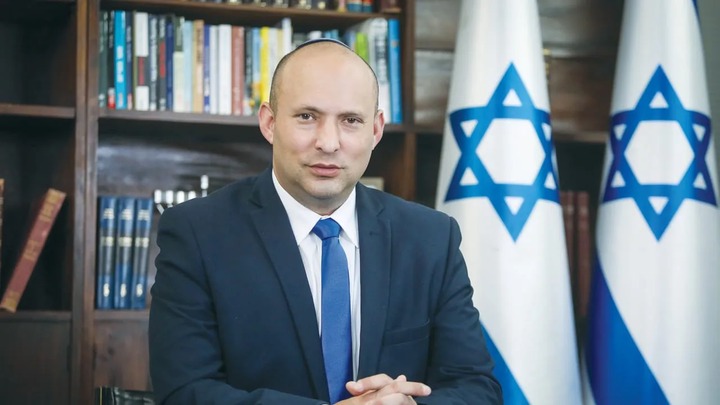
According to a report by The Jerusalem Post, former Israeli prime minister Naftali Bennett has unveiled a sweeping political and national vision dubbed the “Israeli Renaissance” plan.
He also expressed confidence that his newly formed political alliance with opposition leader Yair Lapid will be able to replace Prime Minister Benjamin Netanyahu and establish a long-term governing alternative.
In an interview with The Jerusalem Post, Bennett detailed his vision for Israel’s future following the announcement that his political faction and Lapid’s Yesh Atid party will merge into a single electoral list named “Together,” which he is expected to lead.
The move comes ahead of elections expected no later than October and is being positioned by Bennett as an effort to unify opposition forces and present a structured alternative to the current coalition.
Bennett said the alliance is built on shared principles and expressed confidence that it would remain intact beyond the election cycle. He also stated that Lapid accepts his leadership and that he intends to serve as prime minister without rotation under the agreement.
According to Bennett, the partnership brings together figures from both the political centre and the right, forming what he described as a broad national framework capable of securing a large governing majority.
He argued that the combined opposition list could potentially command between 80 and 85 seats in the Knesset, provided that parties align under agreed guidelines, though questions remain about coalition arithmetic and the exclusion of Arab parties from potential partnerships.
Central to Bennett’s platform is his “Israeli Renaissance” plan, which includes an ambitious goal of bringing one million new immigrants (olim) to Israel over the next decade, with a particular focus on arrivals from the United States, United Kingdom, and Australia.
He described the initiative as part of a broader transformation agenda aimed at strengthening Israel’s economy, education system, technology sector, and international standing.
Bennett said Israel is currently facing what he described as a decline in global perception, particularly in the United States, and pledged to personally lead efforts to improve diplomatic and public relations outreach.
He also outlined plans for major domestic reforms, including the establishment of a state commission of inquiry into governance failures during the October 7 Hamas attack on the first day of his potential government, alongside proposals to limit prime ministerial terms and restructure government ministries.
Additional priorities include integrating ultra-Orthodox communities into employment and national service, reforming the education system, and addressing rising crime rates.
Bennett criticized the current security situation and vowed to take direct responsibility for reducing crime, improving policing, and restoring public safety.
He also emphasized the importance of political unity, warning that internal divisions within the opposition could undermine its chances of success, and called for cooperation across ideological lines to achieve electoral victory.