
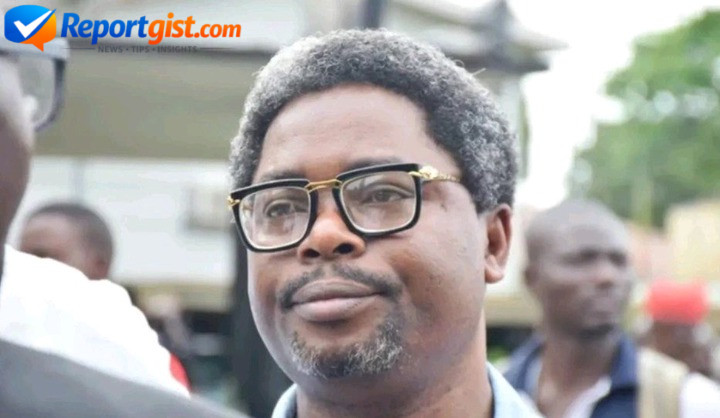
Lere Olayinka, the Senior Special Assistant on Public Communications and Social Media to the Minister of the Federal Capital Territory (FCT), Nyesom Wike, has explained what he believes led to the legal dispute surrounding the registration of the Nigeria Democratic Congress (NDC).
Olayinka made the remarks in a post shared on his official X account, where he commented on the controversy surrounding the party’s registration by the Independent National Electoral Commission (INEC).
According to the media aide, INEC had initially requested that the NDC change its party logo because it closely resembled that of the Movement for Progressive Change (MPC), another political association that had earlier applied for registration.
He claimed that the MPC had submitted its logo to the electoral commission before the NDC’s application was considered, making it necessary for INEC to ask the latter to adopt a different symbol to avoid similarities.
Sharing images of the two logos, Olayinka wrote, “NDC was simply asked to change this logo. Instead, they went to court to secure a judgment compelling INEC to register the party.”
He argued that rather than complying with the electoral commission’s request, the party chose to seek judicial intervention, which ultimately resulted in its registration through a court order.
According to Olayinka, “If you look at the INEC portal, you will see clearly that the registration was done ‘By Court Order.’ That is exactly what happened.”
The presidential aide further maintained that the inscription “By Court Order” displayed on the NDC’s profile on the INEC portal reflects the legal process through which the party was eventually registered.
Speaking further, he said, “The ‘By Court Order’ you are seeing on the INEC portal did not appear there by accident. It simply shows that the registration was done following a court judgment.”
Olayinka maintained that the issue was not initially about refusing to register the political party but rather about ensuring that its logo was sufficiently distinct from that of another political association.
According to him, “INEC only asked them to change the logo because another association had already submitted a similar one. Instead of complying, they chose the legal route.”
He also argued that there was nothing unusual about the commission requesting a political association to modify its logo where similarities with another applicant existed.
In his words, “The issue was not registration. The issue was the logo. Once INEC observed the similarity, it requested that the logo be changed.”
The media aide said many members of the public had misunderstood the circumstances surrounding the registration, insisting that the details available on the INEC portal support his position.
According to Olayinka, “Everything is there for anyone to verify. The records are available, and the process is clearly reflected on the INEC portal.” he added.